


Knee Replacement Recovery Timeline
Week-by-Week Progress & How to Walk Better, Sooner
Knee replacement surgery is one of the most effective procedures for restoring mobility and relieving pain, but recovery takes time.
In this article, we’ll walk you through a realistic recovery timeline and show how tools like
Just Walk can help you return to confident, safe movement faster.
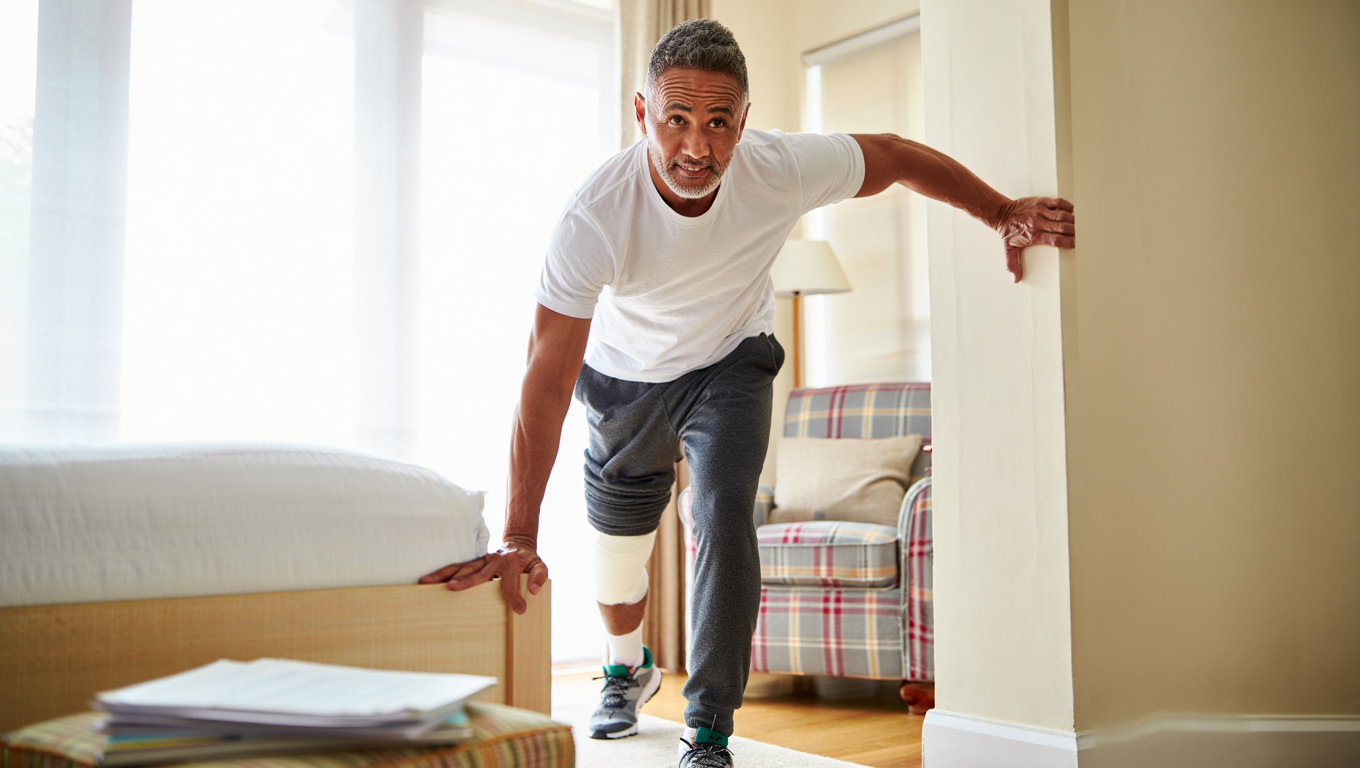
Week-by-Week Knee Replacement Recovery Timeline
Week 1: The Beginning (Hospital & Home Transition)
- Start walking short distances with a walker or crutches
- Begin gentle physical therapy and leg exercises
- Manage swelling and pain
Most people can walk a few steps to the bathroom or around the room
Tip: Early safe movement is critical.
Just Walk
can support upright posture and balanced gait, even in early stages.
Week 2–3: Building Strength
- Increased mobility around the home
- Start bending the knee to 90 degrees
- Transitioning from walker to cane or walking frame
- Short daily walks, often with assistance
Just Walk Advantage: Helps prevent bad walking habits during this crucial transition phase and supports confidence in moving more.
Week 4–6: Gaining Independence
- Walk longer distances indoors and outdoors
- Resume some light chores or errands
- Improved control on stairs
- Physical therapy becomes more challenging
By week 6, many people walk up to 500 meters or more with support. Just Walk can extend that range while reducing fatigue and risk of falls.
Week 6–8: Real Progress
- Walking outside, unassisted or with minimal support
- Driving may be resumed (with surgeon’s approval)
- Return to light work (office jobs)
Most patients walk around 1,000 meters or more by week 8, depending on overall fitness and rehabilitation effort. You may still need support for uneven surfaces or longer walks and that’s where Just Walk shines.
Week 8–12: Back to Daily Life
- Return to most daily activities
- Begin low-impact exercises like cycling or swimming
- Walking is smoother, but muscle building continues
At this stage, many users reduce their reliance on Just Walk or use it selectively for longer distances. It’s a flexible tool that adapts to your recovery.
Top 5 Mistakes After Knee Replacement Surgery and How to Avoid Them
Recovery after total knee replacement requires more than allowing the surgical site to heal. Following a structured rehabilitation program, gradually restoring mobility, and rebuilding muscle strength are essential parts of recovery. According to the American Academy of Orthopaedic Surgeons (AAOS) and the National Health Service (NHS), avoiding certain common mistakes can help patients follow a safer, more effective recovery process.

| Common Mistake | Why It Matters | How to Avoid It |
|---|---|---|
| 1. Avoiding Walking and Staying Inactive | Early walking helps restore knee movement and strength. Remaining inactive instead of following prescribed rehabilitation exercises can delay progress toward normal mobility. | Begin short, assisted walks as directed by your healthcare team. Gradually increase walking activity according to your recovery plan. |
| 2. Neglecting Muscle-Strengthening Exercises | Surgery and reduced activity can leave the quadriceps and surrounding muscles weak, affecting knee function and mobility. | Follow prescribed strengthening exercises, including quadriceps sets and straight-leg raises. Introduce resistance exercises only when approved by your physical therapist or surgeon. |
| 3. Walking With a Limp or Uneven Steps | Limping or leaning away from the operated knee can interfere with the goal of restoring a smooth, balanced walking pattern. | Practice controlled, rhythmic walking with appropriate assistance. Focus on heel-first contact and gradually work toward an even walking pattern. |
| 4. Stopping the Use of Walking Aids Too Early | Transitioning away from a walker or crutches before sufficient strength and balance have returned may compromise walking safety. | Continue using prescribed mobility aids until your surgeon or physical therapist confirms that you are ready to progress. |
| 5. Increasing Activity Too Quickly or Ignoring Swelling | Excessive activity can contribute to postoperative pain and swelling. Rehabilitation requires gradual increases in exercise and walking activity. | Increase activity progressively, follow your prescribed limits, and manage postoperative swelling as directed. Contact your healthcare team if symptoms are concerning or do not improve. |
How Just Walk Support Knee Replacement Rehabilitation
Following a structured rehabilitation plan can help patients rebuild strength, improve walking mechanics, and regain confidence after knee replacement surgery. For patients who continue to experience walking difficulties, targeted gait training may be an additional area to explore with a physical therapist.
Just Walk by Chaban Medical is a wearable gait rehabilitation device that combines adjustable mechanical resistance with repetitive walking practice. Its design is intended to support functional gait training and movement coordination.
In a single-patient case study involving an 80-year-old woman with a history of knee replacement, hip replacement, and spinal surgery, 2.5 weeks of home-based Just Walk training were associated with measurable improvements in functional mobility.
Her Timed Up and Go (TUG) test performance improved from an average of 25.3 seconds to 12.3 seconds, and she reported greater independence in walking and stair climbing.
Just Walk has also been investigated in a peer-reviewed study involving 25 people with chronic stroke, where researchers observed improvements in selected balance and stepping measures following one training session.
What Is Just Walk and How Does It Help?
Just Walk is a unique mobility support product designed specifically for post-surgical rehab. It offers:
- Upright walking assistance
- Improved gait control
- Reduced pressure on the recovering knee
- Better posture and balance
- Confidence to walk more and recover faster
Whether you're in the early recovery phase or pushing to regain full independence, Just Walk bridges the gap between crutches and full mobility.
Learn more about Just Walk and discuss with your rehabilitation professional whether this type of gait training may be appropriate for your individual recovery needs.
Common Questions About Recovery After Knee Replacement
?How far can you walk 8 weeks after knee replacement
By 8 weeks, many patients walk 500–1000 meters or more. Recovery pace varies based on health, therapy consistency, and assistive tools like Just Walk, which promote safer, longer walking.
?How long after a knee replacement can you fly
Doctors usually recommend waiting 4–6 weeks before flying. Long-haul flights may require extra precautions like compression stockings and frequent movement. Always consult your doctor.
?Can you ski after knee replacement
Yes, but only after full recovery — typically 6–12 months post-op. Many surgeons recommend starting with light skiing and using a brace. Rehab tools like Just Walk help develop gait and strength in earlier months.
?How long after knee replacement can you return to normal activities
Most patients return to daily routines by 8–12 weeks. High-impact activities (running, contact sports) take longer if approved at all. Walking aids can speed up recovery for household mobility and errands.
?How long after a knee replacement can you go up and down stairs
Patients often resume stair climbing around Week 4–6, using a railing or cane. Physical therapy will guide this. Products like Just Walk can offer additional control when balance is still improving.
?What can you never do again after a knee replacement
Most people can return to many of their usual activities after knee replacement surgery, including walking, swimming, cycling, and other low-impact exercises. However, orthopedic surgeons generally recommend avoiding high-impact activities such as running, jumping, and contact sports because they place additional stress on the artificial joint and may contribute to implant wear or loosening over time. Your surgeon can help determine which activities are appropriate based on your implant, physical condition, and recovery progress.
?Can too much walking damage a knee replacement
Walking is an important part of knee replacement recovery, but doing too much too soon can increase pain and swelling. This does not necessarily mean the implant has been damaged. Start with manageable distances and gradually increase your walking time according to your surgeon's or physical therapist's instructions. If walking consistently causes increased pain or swelling, reduce your activity and consult your rehabilitation team. Walking should complement, not replace, prescribed strengthening and range-of-motion exercises.
?What is the best sitting position after knee replacement
During early recovery, choose a firm, stable chair with a relatively high seat and supportive armrests to make sitting down and standing up easier. Keep your feet supported and avoid sitting with your legs crossed during the first six weeks. Change positions regularly rather than remaining seated for long periods. When resting, elevate your leg as instructed to help manage swelling, and continue the knee movement exercises recommended by your physical therapist.
?When can I start sleeping on my side after knee replacement surgery
There is no universal waiting period for side sleeping after knee replacement. According to the American Academy of Orthopaedic Surgeons, patients can safely sleep on their back, either side, or stomach. Choose a position that is comfortable and does not place unwanted pressure on the surgical knee. If side sleeping is uncomfortable, try placing a pillow between your legs for support, provided your surgical team approves. Avoid keeping a pillow directly beneath the operated knee in a way that holds it bent for prolonged periods. Always follow any specific positioning instructions given by your surgeon.
Final Thoughts
Every recovery journey is different but with the right approach and tools, you can make it faster and more comfortable.
Just Walk isn’t just a walking aid. It’s a recovery companion.
Want to see how Just Walk can help you or your patients recover better after knee replacement surgery?
Learn more here »
Sources
- Healthline. Total Knee Replacement Surgery Recovery Timeline. https://www.healthline.com/health/total-knee-replacement-surgery/rehabilitation-timeline
- American Academy of Orthopaedic Surgeons (AAOS). Total Knee Replacement Exercise Guide. https://orthoinfo.aaos.org/en/recovery/total-knee-replacement-exercise-guide/
- Cleveland Clinic. Knee Replacement. https://my.clevelandclinic.org/health/treatments/8512-knee-replacement
- NHS. Knee Replacement Recovery. https://www.nhs.uk/tests-and-treatments/knee-replacement/recovery/
- Royal Orthopaedic Hospital. Total Knee Replacemen. https://roh.nhs.uk/services-information/knees/total-knee-replacement
- American Academy of Orthopaedic Surgeons (AAOS):Total Knee Replacement Exercise Guide.
Important
This article is for informational purposes only and is not a substitute for professional medical advice; always consult your doctor or physical therapist before starting any exercise or using any device.
Just Walk Official Distributor: +1-914-345-9300 Or +1-800-431-2830 👉 Become a Just Walk Distributor