


Scissor Gait: Causes, Treatment, and Walking Rehabilitation
Walking is one of the most fundamental human movements—and when it becomes disrupted, independence, safety, and quality of life are often affected. Scissor gait, also known as scissoring gait, is a neurological walking pattern that significantly increases the risk of falls and functional decline.
This gait abnormality is commonly seen after neurological conditions such as stroke or cerebral palsy, and it often requires specialized neuromotor rehabilitation focused on balance, coordination, and walking retraining.
Understanding scissor gait—its causes and treatment options—is an important step for patients, caregivers, and healthcare professionals involved in rehabilitation.
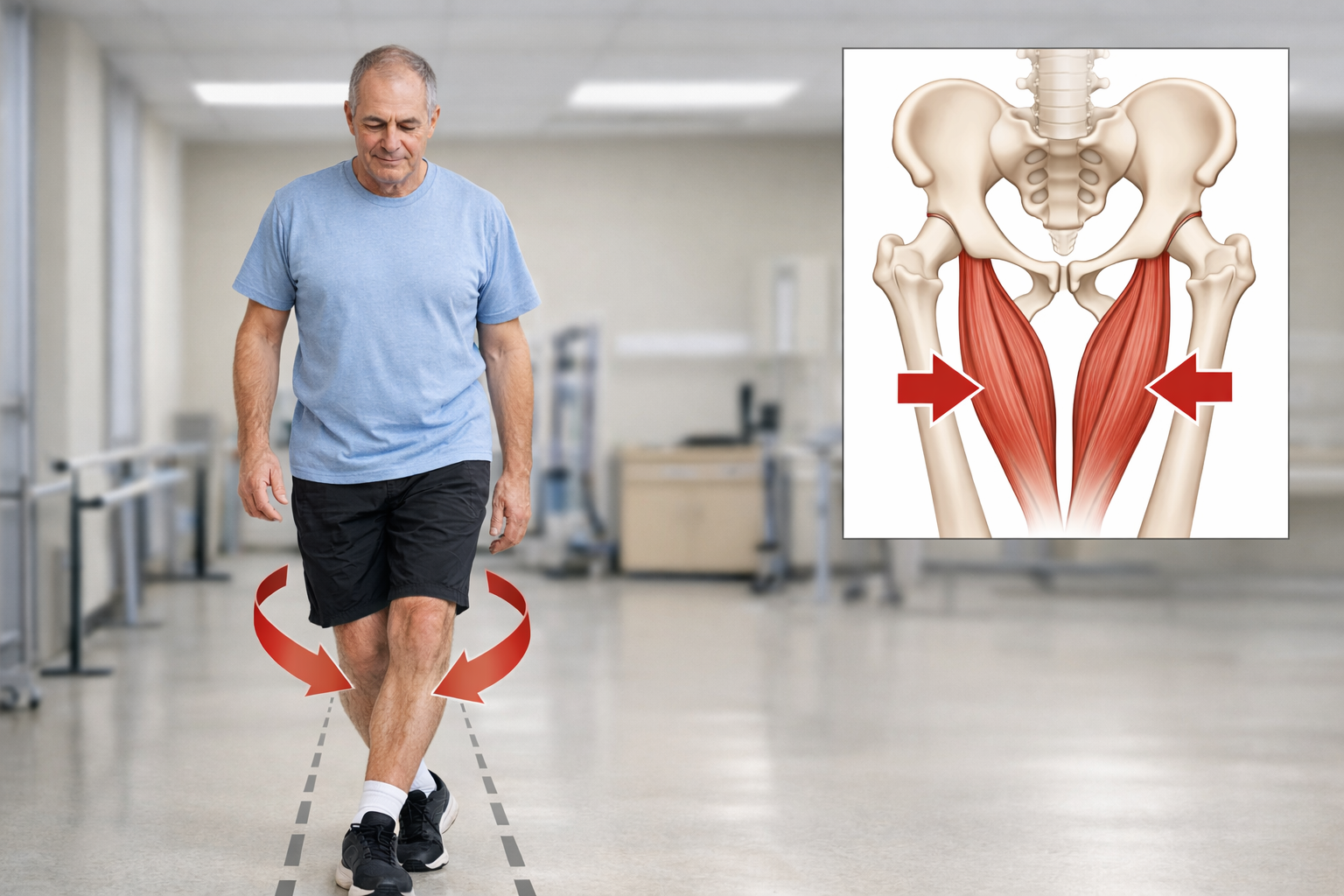
What Is Scissor Gait?
Scissor gait is an abnormal walking pattern in which the legs cross over each other during walking, resembling the motion of scissors. It is characterized by:
- Excessive
hip adduction
- A very
narrow walking base
- Stiff, short steps
- Difficulty maintaining balance
Clinically, scissoring gait is associated with
spasticity, not muscle weakness. The increased muscle tone—especially in the inner thigh muscles—pulls the legs inward during movement.
Who Is Affected and Why It Occurs
Scissor gait is most commonly caused by upper motor neuron damage, leading to impaired motor control and coordination.
Common neurological causes include:
- Stroke (CVA)
- Cerebral palsy (especially spastic diplegia)
- Multiple sclerosis
- Spinal cord injury
- Traumatic or acquired brain injury
You may also hear clinicians refer to:
- Spastic scissoring gait
- Hip scissoring gait
- Neurological gait with leg crossing
For many patients, scissor gait develops after illness or injury and becomes more pronounced with fatigue, stress, or reduced postural control.
Scissor Gait Treatment and Rehabilitation Options
Effective scissor gait treatment focuses on improving neuromotor control rather than simply strengthening muscles.
Evidence-based rehabilitation approaches include:
- Neurological physical therapy
- Gait retraining and neuromuscular re-education
- Spasticity management (stretching, positioning, medical management)
- Postural control and dynamic equilibrium training
- High-dose, task-specific motor practice
Modern rehabilitation emphasizes
neuroplasticity—the brain’s ability to relearn movement patterns through repetition and functional practice. For many individuals, combining clinic-based therapy with
structured home rehabilitation leads to better long-term outcomes.
At-Home Gait Rehabilitation: Tools and Strategies
Patients and caregivers often ask how to continue progress outside the clinic. Consistency is critical for neurological recovery.
Helpful strategies include:
- Short, frequent walking practice sessions
- Supervised gait exercises focused on alignment
- Safe home environments to reduce fall risk
Assistive or therapeutic walking tools designed for
neuromotor retraining
Product Integration: Just Walk by Chaban Medical
Just Walk by Chaban Medical is a neuromotor rehabilitation device designed to support walking rehabilitation, balance training, and coordinated movement.
It is used by:
- Patients recovering from stroke or neurological illness
- Individuals with spastic gait patterns
- Rehabilitation clinics and home-care programs
Unlike passive walking aids, Just Walk encourages active participation, promoting motor control, coordination, and safer gait mechanics during real walking practice.
Why Just Walk Stands Out in Gait Rehabilitation
Just Walk is not a robotic system or a standard walker. It is designed specifically for functional gait retraining.
Key differentiation points:
- Supports neuromotor learning, not passive compensation
- Suitable for
clinic and at-home rehabilitation
- Encourages upright posture and controlled stepping
- Designed for patients with neurological gait disorders
This makes it particularly relevant for individuals with
scissoring gait who require repetitive, task-specific walking practice in a safe and structured way.
Summary
Scissor gait is a complex neurological walking disorder that affects balance, safety, and independence. With the right treatment approach, including professional physical therapy and consistent gait training, meaningful improvement is possible.
Modern rehabilitation strategies—especially those that extend beyond the clinic into the home—play a critical role in long-term recovery.
If you or someone you care for is experiencing walking difficulties related to neurological conditions, exploring structured gait rehabilitation solutions may be an important next step.
FAQ
?What causes scissor gait
Scissor gait is caused by increased muscle tone (spasticity) due to upper motor neuron damage, commonly from stroke or cerebral palsy.
?Is scissor gait the result of muscle weakness
No. While weakness may coexist, scissoring gait is primarily caused by spasticity and impaired motor control, not weakness.
?Can scissor gait be improved with physical therapy
Yes. Targeted neurological physical therapy and gait training are the primary treatments and can significantly improve walking ability.
?Is scissor gait permanent
Not always. Many patients see improvement with early, consistent rehabilitation and appropriate walking retraining strategies.
Sources & References
- Mayo Clinic – Gait Abnormalities and Neurological Disorders
- National Institute of Neurological Disorders and Stroke (NINDS)
- American Physical Therapy Association (APTA)
Important
This article is for informational purposes only and is not a substitute for professional medical advice; always consult your doctor or physical therapist before starting any exercise or using any device