


Ataxic Gait Treatment: Improve Balance and Walking
Walking should feel natural but for individuals with ataxic gait, every step can be unpredictable and unstable. This condition, often described as a lack of coordination or “drunken walking,” significantly increases fall risk and reduces independence.
Understanding
ataxic gait treatment options is essential for patients, caregivers, and clinicians looking to restore mobility and confidence. With advances in rehabilitation, targeted interventions can now improve coordination and walking patterns more effectively than ever.
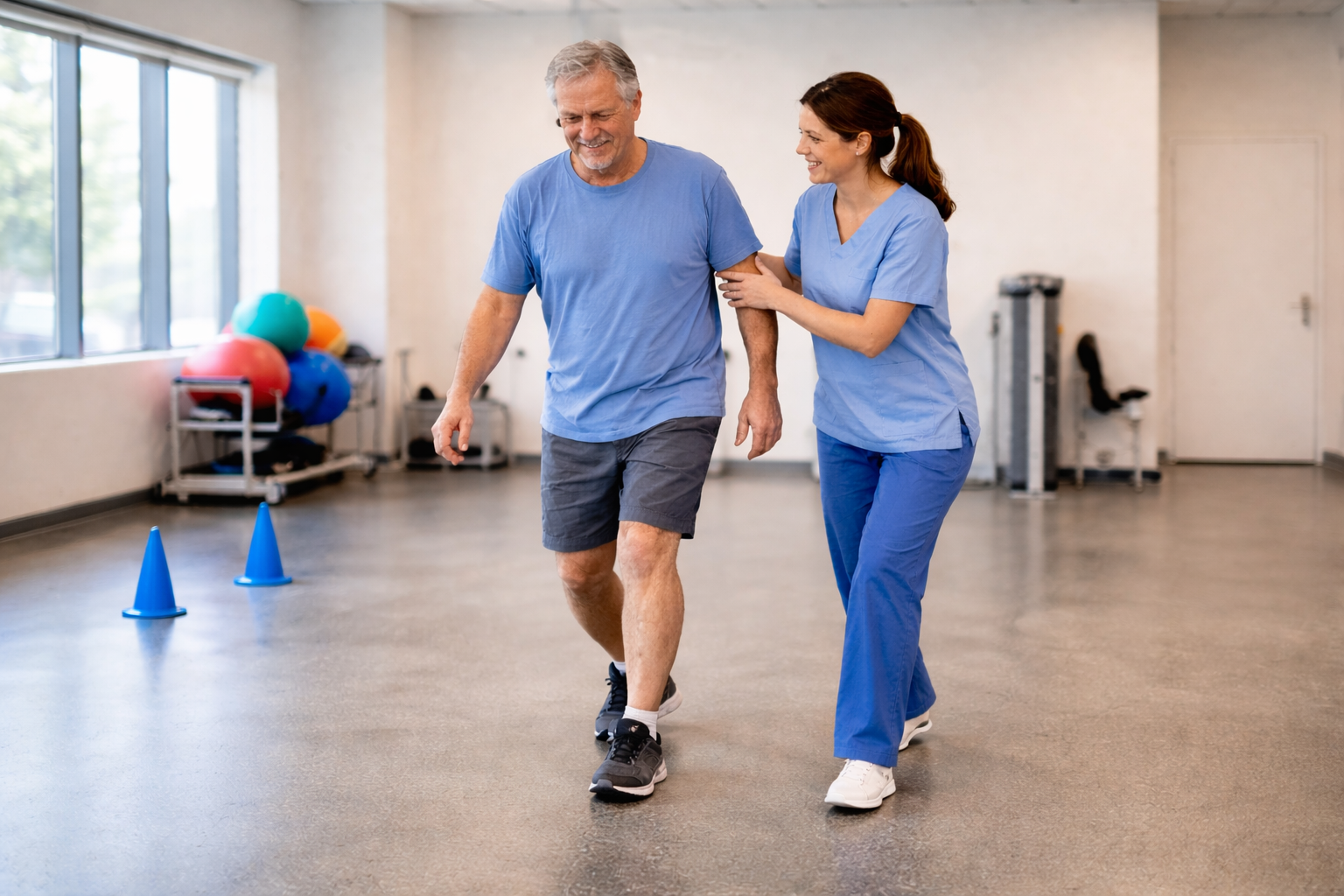
What Is Ataxic Gait?
Ataxic Gait refers to an uncoordinated walking pattern caused by impaired control of movement.
Common characteristics include:
- Wide-based stance
- Irregular step timing
- Difficulty maintaining balance
- Veering or staggering
Ataxic movement occurs when the brain, especially the cerebellum, fails to properly coordinate muscle activity.
Causes of Ataxic Gait
Understanding the cause of ataxic gait is critical for selecting the right rehabilitation approach.
Common causes include:
- Cerebellar Ataxia
- Stroke
- Multiple Sclerosis
- Sensory ataxic neuropathy (damage to peripheral nerves affecting position sense)
- Traumatic brain injury
In some cases, conditions like
ataxic hemiparesis combine weakness with coordination deficits, making walking even more challenging.
Why Ataxic Gait Matters
Ataxic gait is more than just unsteady walking, it has real consequences:
- Increased risk of falls and injuries
- Reduced independence
- Fear of movement (kinesiophobia)
- Decline in overall physical conditioning
For many patients, the inability to walk safely impacts quality of life more than the underlying diagnosis itself.
Ataxic Gait Treatment and Rehabilitation
Effective ataxic gait treatment focuses on improving coordination, balance, and motor control through repetition and functional training.
Key rehabilitation approaches:
1. Coordination exercises for ataxia
- Target timing and control of movement
- Improve communication between brain and muscles
2. Balance training
- Static (standing) and dynamic (walking) exercises
- Reduces fall risk
3. Task-specific gait training
- Practicing real walking scenarios
- Turning, stopping, obstacle navigation
4. Ataxic exercises (upper and lower limb)
- Arm exercises for ataxia improve overall coordination
- Ataxia exercises for upper limb support posture and gait symmetry
📊 Comparison of Rehabilitation Approaches
| Approach | Focus | Limitation | Functional Impact |
|---|---|---|---|
| Coordination exercises | Isolated control | Not always transferable | Moderate |
| Balance training | Stability | Limited walking carryover | Moderate |
| Traditional physiotherapy | General strength | Less task-specific | Moderate |
| Task-specific gait training | Real walking | Requires consistency | High |
👉 The most effective results come from
training that mimics real walking.
Modern Rehabilitation: A Functional Approach
Traditional therapy often separates exercises from real-life walking. However, research increasingly supports
task-specific rehabilitation, where walking itself becomes the therapy. This is particularly important for
ataxic movement, where timing and coordination must be relearned in context not isolation.
Product Integration: Walking as Therapy
Devices like Just Walk by Chaban Medical are designed around this exact principle.
Instead of:
- Passive support
- Or isolated exercises
They provide:
- Controlled resistance during walking
- Repetitive, functional movement
- Reinforcement of correct gait patterns
What makes it different:
- Encourages neuroplasticity through repetition
- Integrates therapy into daily walking
- Suitable for home and clinical use
👉 This makes it especially relevant for patients with
ataxic gait, where consistent, real-world practice is key.
Practical Tips for Patients and Caregivers
- Practice walking daily in a safe environment
- Focus on slow, controlled steps
- Use visual or physical cues for stability
- Combine lower limb and arm exercises for ataxia
- Stay consistent, progress comes with repetition
When to Seek Medical Evaluation
You should consult a specialist if:
- Walking becomes progressively unstable
- There are unexplained coordination issues
- Symptoms follow a neurological event
Early evaluation allows for better-targeted
ataxic gait treatment and improved outcomes.
Summary
Ataxic gait is a complex but treatable condition. With the right combination of coordination exercises, balance training, and task-specific walking therapy, patients can significantly improve mobility.
Modern rehabilitation approaches especially those integrating walking into therapy offer new opportunities for recovery and independence.
FAQ
?What is ataxic gait
Ataxic gait is an uncoordinated walking pattern caused by neurological dysfunction, often involving the cerebellum.
?What is the best ataxic gait treatment
The most effective approach combines coordination exercises, balance training, and task-specific walking practice.
?Can ataxia improve with exercise
Yes. Consistent ataxic exercises and rehabilitation can improve coordination, stability, and walking ability.
?Are upper limb exercises important in ataxia
Yes. Ataxia exercises for upper limb improve overall coordination and support better posture and gait control.
Sources & References
- National Institute of Neurological Disorders and Stroke
- American Physical Therapy Association
Important
This article is for informational purposes only and is not a substitute for professional medical advice; always consult your doctor or physical therapist before starting any exercise or using any device
Just Walk Official Distributor: +1-914-345-9300 Or +1-800-431-2830 👉 Become a Just Walk Distributor