


Overcoming Knee Hyperextension: Causes, Braces, and Gait Rehab
Walking is an intricate, subconscious symphony played by the brain, nerves, and muscles. But for individuals recovering from neurological events or severe orthopedic injuries, that rhythm is often broken. One of the most disruptive and exhausting gait abnormalities a patient can experience is when the knee joint hyper-extends—violently locking backward with every step.
Known clinically as
genu recurvatum, this condition turns a simple walk across the room into a fatiguing, unstable hurdle. Understanding why this happens and moving beyond traditional, rigid mobility limitations is essential to reclaiming a natural, confident stride.
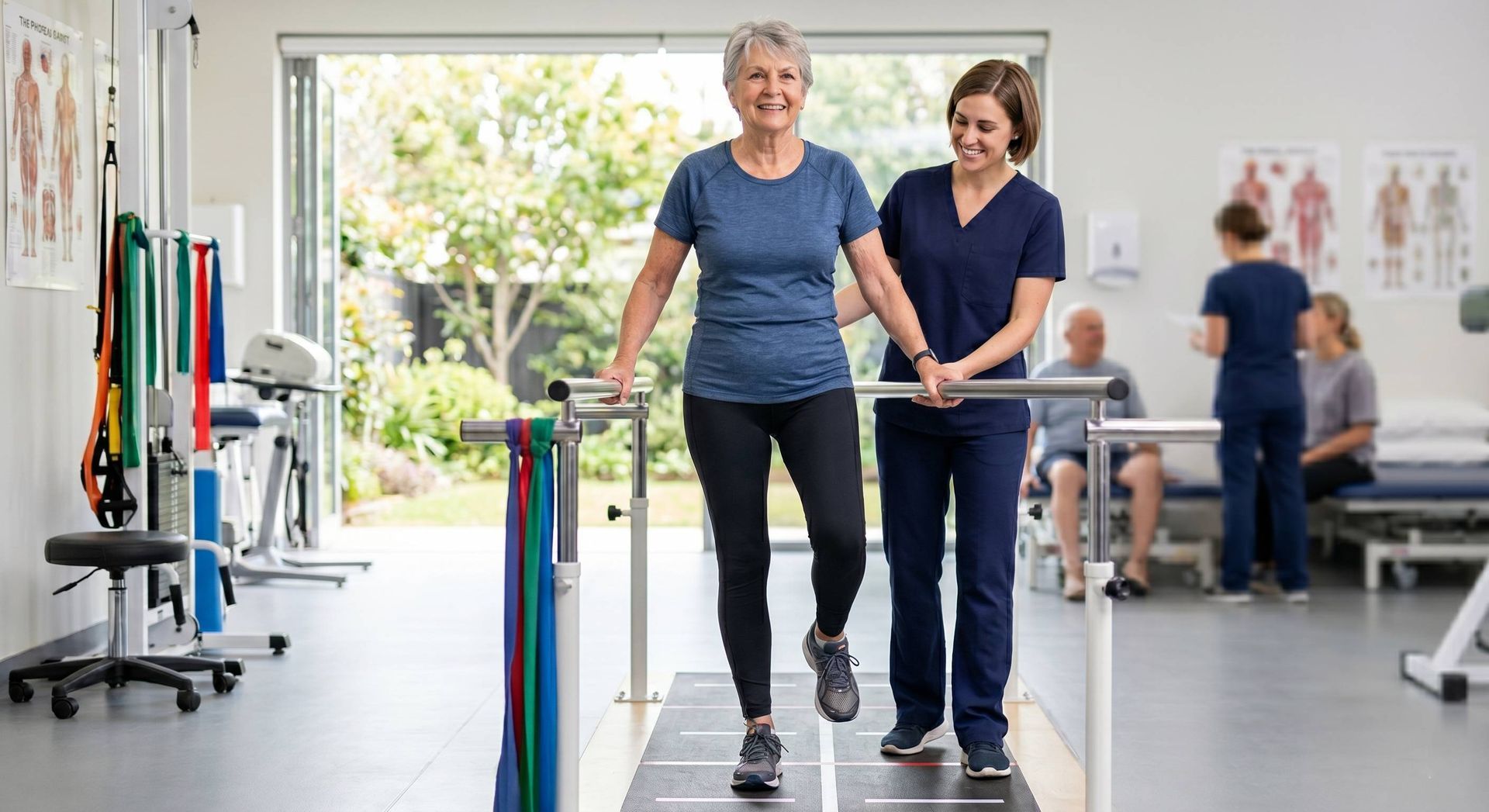
What is Knee Hyperextension (Genu Recurvatum)?
Knee hyperextension occurs when the knee joint is forced or straightened beyond its normal, linear alignment. In a healthy gait cycle, the knee straightens fully but maintains a slight, protective flexibility to absorb the shock of stepping down. When genu recurvatum is present, the lower leg tilts too far backward in relation to the thigh during the standing phase of walking.
While it can occasionally be caused by an acute
knee hyperextension injury (such as a sports-related ligament tear), chronic hyperextension during walking is usually a secondary symptom of a deeper muscular or neurological imbalance.
Why It Happens and Who It Affects
Genu recurvatum rarely stems from a problem inside the knee joint itself. Instead, it is typically a mechanical coping mechanism for weakness elsewhere in the body. It most commonly affects individuals navigating:
- Neurological Conditions: Post-stroke knee hyperextension is incredibly common. It also frequently impacts individuals living with Multiple Sclerosis (MS), Cerebral Palsy, or Traumatic Brain Injuries. When the brain cannot properly signal the quadriceps or hamstrings, the patient intentionally "locks" the knee backward to create a rigid column of bone, using skeletal alignment to stay upright because their muscles cannot support them.
- Proprioceptive Deficits: If a patient has poor proprioception—the body's ability to sense its position in space—they may over-extend the knee simply because their brain does not realize the joint has already reached a straight, upright position.
- Orthopedic Weakness: Chronic weakness in the hip stabilizers, severe hamstring weakness, or extreme tightness in the calf muscles can all pull the knee into an unnatural backward bend.
Left untreated, this continuous backward pressure stretches the posterior capsule of the knee, degrades the ligaments, and accelerates joint degeneration, leading to chronic pain and an elevated risk of falls.
Beyond the Traditional Knee Hyperextension Brace
For decades, the standard response to this condition has been a rigid hyperextension knee support or an Ankle-Foot Orthosis (AFO). While these heavy, external braces successfully block the knee from bending backward, they present a significant clinical downside: they act as a passive crutch.
When a brace does all the structural work, the patient's remaining muscles are left underutilized. Over time, this lack of engagement causes further muscle atrophy and reinforces poor neurological habits. The moment the brace is removed, the hyperextension returns.
True
neurological gait rehabilitation requires a dynamic shift. Instead of just stopping the unwanted movement, therapeutic tools must teach the body and the brain how to actively stabilize the joint on their own.
The Just Walk Solution: A New Era in Gait Training Devices
To break the cycle of muscle weakness and joint degeneration, rehabilitation must happen actively during motion. This is where the
Just Walk system by Chaban Medical completely redefines the therapeutic approach.
How Just Walk Rewrites the Rehab Script
Unlike traditional, passive braces, Just Walk is a lightweight, fully mechanical wearable device that uses smart, magnet-driven resistance to retrain the gait cycle. It targets the root causes of hyperextension knee complications through three distinct mechanisms:
- Assisted Knee Flexion: One of the greatest challenges in post-stroke recovery is initiating a step. Just Walk generates a gentle, upward-directed tension. As the patient prepares to lift their foot, the device actively assists in flexing the knee and lifting the foot, fundamentally preventing the joint from locking backward at the start of the stride.
- Proprioceptive Sensory Feedback: The device utilizes an adjustable magnetic field to apply constant, smooth linear resistance. This resistance forces active joint approximation, sending sharp, clear tactile feedback up the leg. This tells the brain exactly where the leg is in space, allowing the central nervous system to safely correct its alignment.
- Active Muscle Engagement: Because the resistance scales naturally with the user's walking speed, the hamstrings, glutes, and core are forced to actively fire to overcome the resistance. Instead of bypassing weak muscles, Just Walk builds the targeted strength required to prevent hyperextension naturally.
Learn more about how this technology restores mobility on the official Just Walk™ Product Page
Effective Knee Hyperextension Exercises for At-Home Care
While advanced technology provides the framework for correct alignment, pairing it with targeted physical therapy accelerates recovery. Caregivers and patients can utilize these safe knee hyperextension exercises at home:
- Terminal Knee Extension (TKEs): Anchor a resistance band to a stable structure at knee height. Loop the other end behind the affected knee, facing the anchor point. Start with a slight bend in the knee, then slowly straighten the leg against the band's resistance, focusing on squeezing the quadriceps without snapping the joint backward.
- Bridging: Lie on your back with knees bent and feet flat on the floor. Squeeze your glutes and push through your heels to lift your hips toward the ceiling. This strengthens the hamstrings and glutes, providing the posterior support the knee needs during a walk.
- Backward Walking: Walking backward safely (while holding onto a handrail or a caregiver's support) inherently forces the knee into a safe flexed position, interrupting the neurological pattern that triggers hyperextension.
Summary
Knee hyperextension does not have to be a permanent obstacle to independent mobility. By moving away from restrictive, passive braces and embracing dynamic, muscle-activating technology, you can retrain your nervous system and rebuild true walking symmetry.
Discover how the innovative, magnet-driven technology of Just Walk can transform your physical therapy journey.
Visit the
Chaban Medical Just Walk
Product
to learn more about bringing this advanced rehabilitation solution into your clinic or home.
Related Topics
Multiple Sclerosis Physical Therapy Exercises
A Smarter Solution for Elderly Mobility Rehabilitation
FAQ
?Can knee hyperextension fix itself over time
Generally, no. In neurological or chronic cases, hyperextension is a structural adaptation to muscle weakness. Without targeted intervention, exercises, or gait training devices, the continuous stretching of the ligaments usually worsens the condition and causes long-term joint damage.
?How is Just Walk different from a standard knee brace
A standard brace is passive; it physically locks your joint to prevent backward movement, which can weaken muscles over time. Just Walk is an active gait trainer. It uses magnetic resistance to gently guide the knee into a proper bend while forcing your muscles to work, helping your brain re-learn how to walk correctly.
?Is Just Walk safe to use at home without a therapist present
Yes. While it is widely used by physical therapists in clinical settings, Just Walk is intentionally designed to be lightweight, fully mechanical (no electricity or batteries required), and easy to put on, making it highly effective for continuous rehabilitation at home.
Sources & References
Journal of NeuroEngineering and Rehabilitation: "Gait abnormalities and treatment paradigms in post-stroke hemiparesis: A clinical review."
Archives of Physical Medicine and Rehabilitation: "The impact of knee hyperextension (Genu Recurvatum) on gait speed and energy expenditure in neurological populations."
Important
This article is for informational purposes only and is not a substitute for professional medical advice; always consult your doctor or physical therapist before starting any exercise or using any device