


How to Stop Limping: Re-Training Your Brain for a Balanced Walk
Walking is a complex symphony of neurological signals and muscular responses. When that symphony is interrupted by a limp, scientifically known as an asymmetric gait, the impact resonates through the entire body. Whether you are limping on the right leg due to a recent injury or noticed you are walking with a limp but no pain, understanding the underlying mechanics is the first step toward reclaiming your independence.
What is Limping?
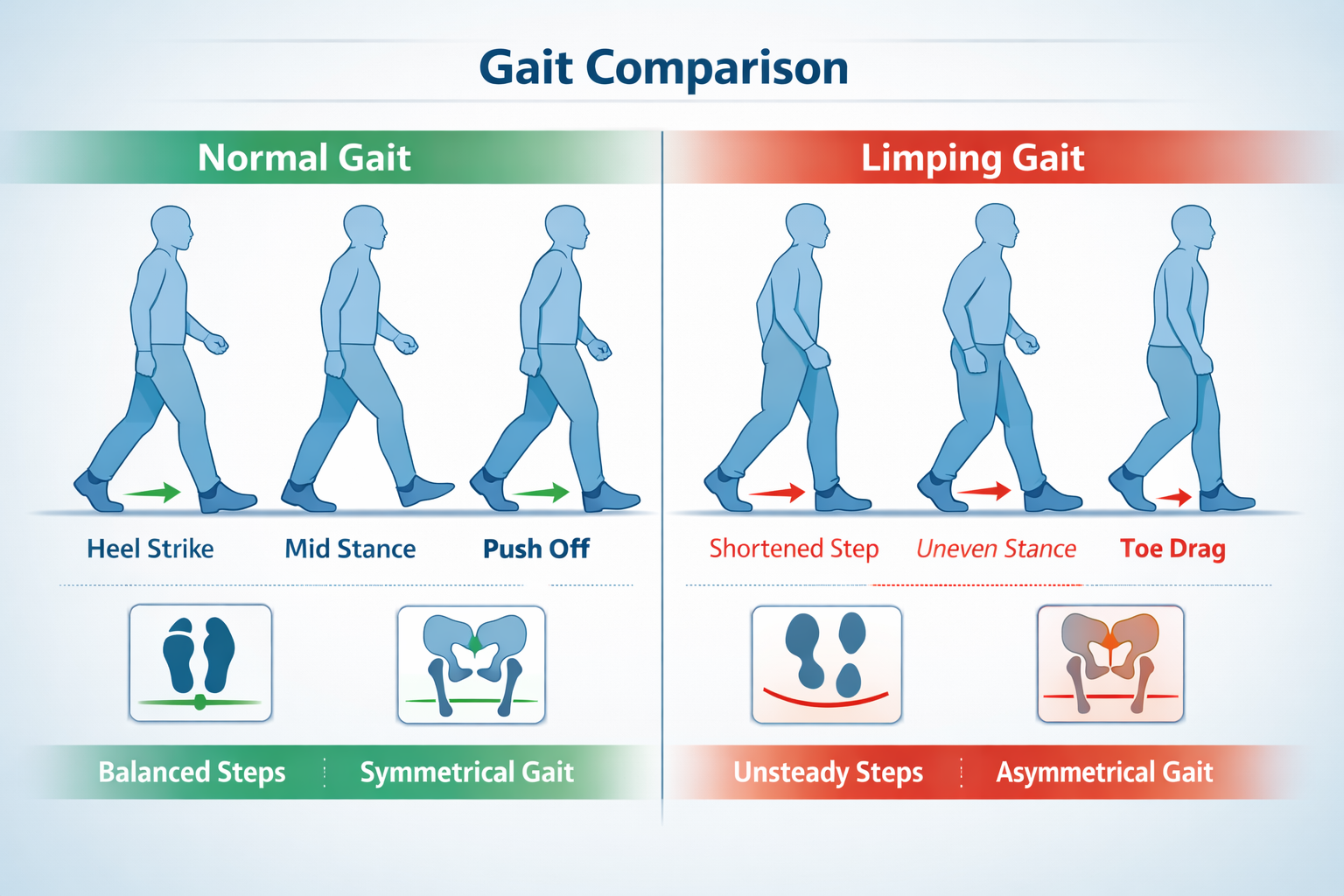
Limping is a deviation from the normal walking pattern, usually characterized by unequal time spent on each leg. While it often begins as a protective mechanism to avoid pain, it can quickly become a learned habit. For many adults, a limp persists even after the initial injury has healed because the brain’s software has not updated to the body’s hardware recovery.
Causes of Limping in Adults
Understanding the various causes of limping in adults is essential for proper treatment. While some causes are temporary, others require long term clinical intervention.
| Cause of Limping | What Happens | Recommended Approach |
|---|---|---|
| Post surgical recovery such as hip or knee replacement or ACL repair | Muscles weaken and walking symmetry is disrupted | Strengthening exercises and gait retraining |
| Neurological conditions such as stroke, MS, or Parkinson’s disease | Brain signals to the legs become unbalanced | Neuroplasticity based rehabilitation and neuromotor training |
| Joint degeneration such as osteoarthritis | Pain and stiffness change walking mechanics | Pain management and corrective walking exercises |
| Peripheral neuropathy | Reduced sensation in the feet affects balance and coordination | Balance therapy and walking retraining |
| Habitual compensation after injury | The brain continues using an old protective walking pattern | Neuromotor retraining and proprioceptive feedback |
The Mystery of Walking With a Limp But No Pain
A common concern for patients is walking with a limp but no pain. Even if it does not hurt, an asymmetrical gait can still create long term problems. It forces the healthy side of the body, for example if you are limping on the right leg your left side, to absorb significantly more impact.
Over time this imbalance can lead to secondary issues such as lower back pain, hip strain, and premature joint wear on the non injured side. Addressing a limp early helps prevent this chain reaction of compensation.
How to Stop Limping When I Walk: Effective Exercises
When patients ask how to stop limping when I walk, the answer often lies in consistency, strength, and neurological feedback. Several exercises can help restore a balanced walking pattern.
Weight Shifting
Stand between two chairs for support and practice shifting your full body weight onto the affected leg. This helps rebuild confidence and balance.
Marching in Place
Focus on lifting the knee upward and maintaining good posture. This strengthens the hip flexors and improves foot lift during walking.
Step Ups
Using a low platform or step, practice controlled step ups to rebuild quadriceps strength and improve the push off phase of walking.
Neuromotor Retraining
Exercises that challenge coordination and proprioception help the brain relearn correct movement patterns and restore natural gait symmetry.
Product Integration: The Just Walk Advantage
Traditional physical therapy often relies on heavy clinic equipment and short therapy sessions. Just Walk changes the landscape by bringing clinical grade neuromotor retraining into everyday walking.
Why Just Walk Stands Out
Unlike standard braces that simply support the leg, Just Walk uses a patented magnet driven mechanical system designed to help retrain the brain and muscles together.
- Proprioceptive Feedback
The device provides resistance that helps the brain feel the position of the leg during movement, helping break the habit of a persistent limp. - Dual Action Support
It assists with foot lift while also providing resistance during the swing phase of walking, addressing both coordination and muscle weakness. - Ultra Portable Design
Weighing only about 3 pounds, Just Walk allows patients to practice walking in real world environments such as hallways, sidewalks, and daily routines where true recovery occurs. - Target Users
The device can be particularly beneficial for individuals recovering from stroke, multiple sclerosis, joint replacement surgery, or other conditions affecting gait symmetry.
Learn more about Just Walk Neuromotor Rehabilitation to see how this wearable system supports walking recovery.
Summary
A limp is not a permanent condition. It is a signal that your neuromotor system needs recalibration. By combining targeted exercises, consistent practice, and advanced neuromotor retraining technologies like Just Walk, many people can restore a natural and balanced walking pattern while protecting their long term joint health.
If you would like to learn whether Just Walk may support your recovery journey, consult your healthcare professional or contact an authorized distributor for additional information.
Related Topics
The Role of Neuroplasticity in Stroke Recovery
Preventing Falls Balance Training for Senior
Post Knee Replacement The First 90 Day
FAQ
?Can a limp be corrected after several years
Yes. Through neuroplasticity and consistent gait training, the brain can learn new walking patterns even years after an injury.
?What diseases commonly cause limping
Beyond injuries, conditions such as Multiple Sclerosis, Cerebral Palsy, arthritis, and neurological disorders may affect gait symmetry.
?Why does my limp worsen when I am tired
Walking symmetrically requires both muscular and neurological effort. When fatigue sets in, the brain often reverts to the easier compensatory pattern.
Sources & References
- Mayo Clinic Gait Abnormalities and Causes
- Journal of NeuroEngineering and Rehabilitation Effects of Wearable Systems on Gait Asymmetry
Important
This article is for informational purposes only and is not a substitute for professional medical advice; always consult your doctor or physical therapist before starting any exercise or using any device
Just Walk Official Distributor: +1-914-345-9300 Or +1-800-431-2830 👉 Become a Just Walk Distributor