


Sarcopenia Exercises for Elderly
By age 80, the average person has lost nearly half the muscle mass they had at 40. That loss — called sarcopenia in old age — is the single biggest reason seniors become frail, fall, and lose independence. Yet most have never heard the word until a doctor says, “You’re here because of muscle loss.”
The research is now crystal clear: resistance exercises for sarcopenia are the #1 proven way to slow this process, preserve strength, and keep people in their own homes longer. The problem? Traditional gym programs fail 70–80 % of frail seniors because of transportation, fear, and boredom.
This guide explains
what is sarcopenia, its four classic symptoms, and the one daily habit that finally makes
sarcopenia resistance training realistic for even the frailest older adults.
What Is Sarcopenia — and Why Should You Care Today?
What is sarcopenia?
It is the progressive, age-related decline in skeletal muscle mass, strength, and function. The European Working Group on Sarcopenia in Older People (EWGSOP2) defines it as low muscle strength + low muscle quantity/quality.
After age 30 we lose 3–8 % of muscle per decade. After 70 the rate doubles. By 85, more than 50 % of adults meet full diagnostic criteria.
What are 4 symptoms of sarcopenia most families notice first?
- Takes two hands (or arms on chair) to stand up
- Walking speed has slowed dramatically compared to peers
- Frequent near-falls or shuffling steps
- Carrying groceries or laundry feels impossibly heavy
If two or more sound familiar, sarcopenia is already stealing independence.
Can Sarcopenia Be Reversed — or Only Slowed?
Can sarcopenia be reversed?
Not completely — lost muscle fibers don’t grow back like skin.
But dozens of randomized trials show that sarcopenia resistance training produces 10–30 % strength gains and measurable muscle growth even in 90-year-olds. Functional improvements (faster walking, fewer falls, easier stair climbing) are routine within 12–24 weeks.
The catch: the training must be
- Progressive (gets harder over time)
- High volume (thousands of repetitions weekly)
- Extremely safe (zero fall risk during the exercise itself)
That combination almost never happens with traditional programs.
How to Prevent Sarcopenia (or Slow It Dramatically)
Two evidence-based pillars:
- Protein intake of 1.2–1.6 g/kg body weight daily
- Progressive resistance training 150–200 minutes per week
Everything else (vitamin D, hormones, etc.) is secondary.
The problem is compliance. Less than 20 % of seniors stick with classic PT handouts of “three sets of ten squats” three times a week.
The Missing Piece: Resistance Training That Actually Happens Every Day
Imagine a tool that:
- Weighs 3 lbs and straps on in 10 seconds
- Adds gentle, adjustable resistance to every normal step
- Requires no gym, no appointments, no extra time
- Delivers 1,000–1,500 muscle contractions in a 15-minute walk
That tool exists — and it’s changing geriatric care.
Just Walk™: The First Resistance-Training Solution Seniors Will Actually Use
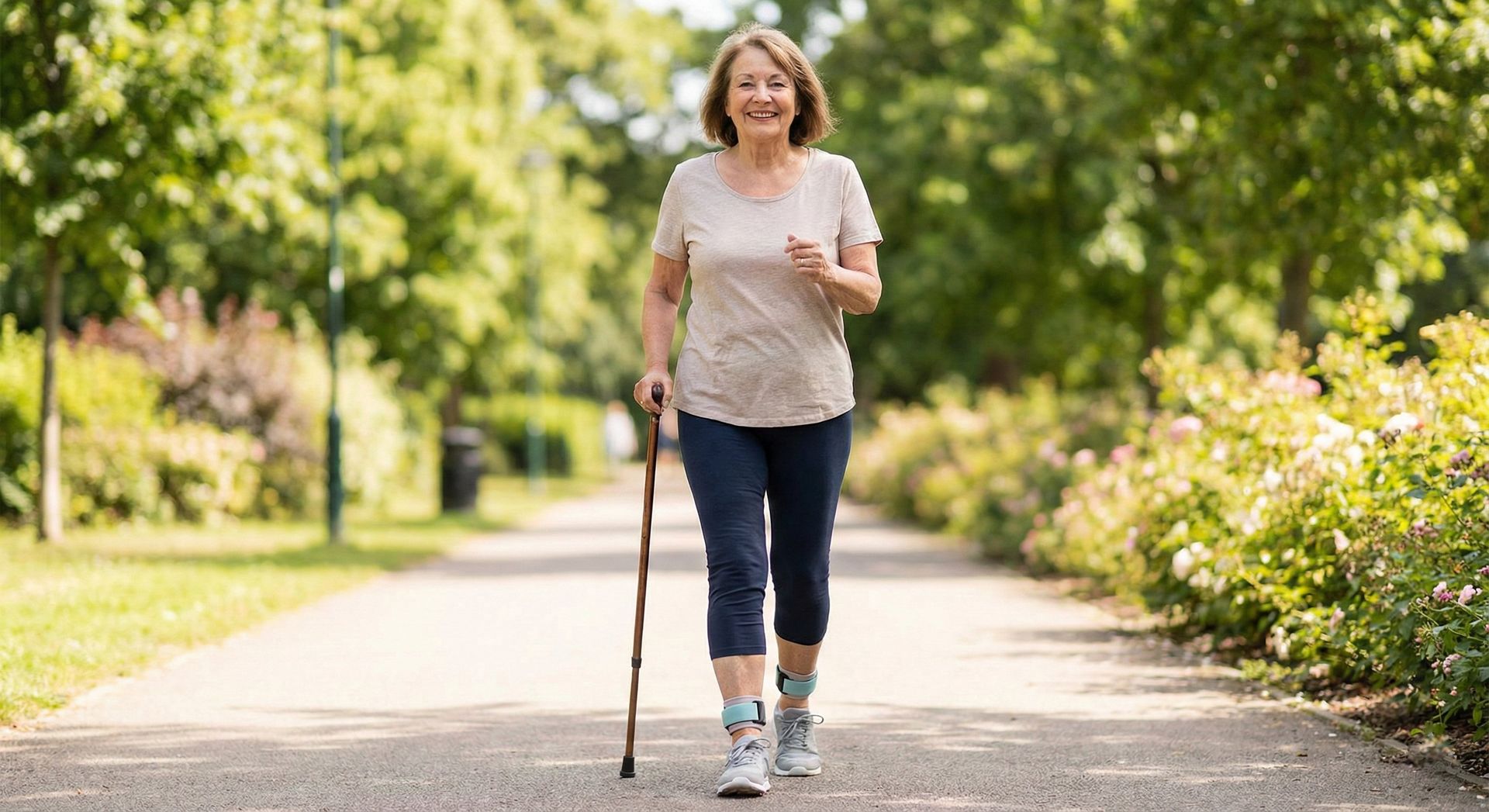
Just Walk™ by Chaban Medical is a fully mechanical wearable that turns routine household walking into progressive strength training.
How it works in practice
- Four magnetic resistance levels start lighter than a therapy band
- Each step trains quads, hamstrings, glutes, and calves simultaneously
- A single 15-minute walk = 900–1,200 high-quality repetitions
- Two short walks daily = 12,000–15,000 reps per week (the exact dose shown to reverse sarcopenia)
What makes Just Walk™ different from every other senior exercise solution
- No gym membership or transportation required
- No learning curve — if they can walk, they can use it
- Seated mode for very frail users or painful arthritis days
- Compliance routinely exceeds 90 % (vs. 15–25 % for paper handouts)
Perfect for:
- Community-dwelling seniors 75+
- Assisted-living and nursing-home walkers programs
- Adult children looking for one meaningful gift that actually works
Summary: Your Daily Action Plan
What is sarcopenia and how do you slow it?
Eat enough protein and perform progressive resistance training — ideally every single day.
Just Walk™ removes the biggest barrier: it makes the resistance part effortless, enjoyable, and built into life rather than added on top of it.
Start today. The muscle you save is the independence you keep.
Related Topics
FAQs
?What is sarcopenia and how do you slow it
Sarcopenia is age-related muscle loss. Slow it with 1.2–1.6 g/kg protein daily + progressive resistance training. Just Walk™ delivers the resistance portion safely and consistently.
?Can sarcopenia be reversed
Not fully, but consistent resistance training routinely produces 10–30 % strength gains and functional improvements even after age 90.
?Are resistance exercises for sarcopenia safe for very frail seniors
Yes — when the load is tiny and adjustable. Just Walk™ starts lighter than a pound of butter and progresses only as tolerated.
?How much exercise is needed for sarcopenia resistance training benefits
Research shows 12,000–15,000 quality repetitions per week is ideal. Two 15-minute walks with Just Walk™ easily meets (and exceeds) that target.
References
Important
This article is for informational purposes only and is not a substitute for professional medical advice; always consult your doctor or physical therapist before starting any exercise or using any device
Just Walk Official Distributor: +1-914-345-9300 Or +1-800-431-2830 👉 Become a Just Walk Distributor