


Shuffling Gait: Causes, Treatment, and Rehab Strategies
A shuffling gait marked by short steps, reduced foot clearance, and limited arm swing—is a common gait abnormality seen in neurological and aging populations. Individuals who walk with a shuffling gait often experience difficulty walking, frequent stumbles, and loss of confidence during daily activities.
For physical therapists, individuals, and physiotherapy centers, early identification and targeted rehabilitation of shuffling gait are essential to improving mobility, reducing fall risk, and supporting long-term independence.
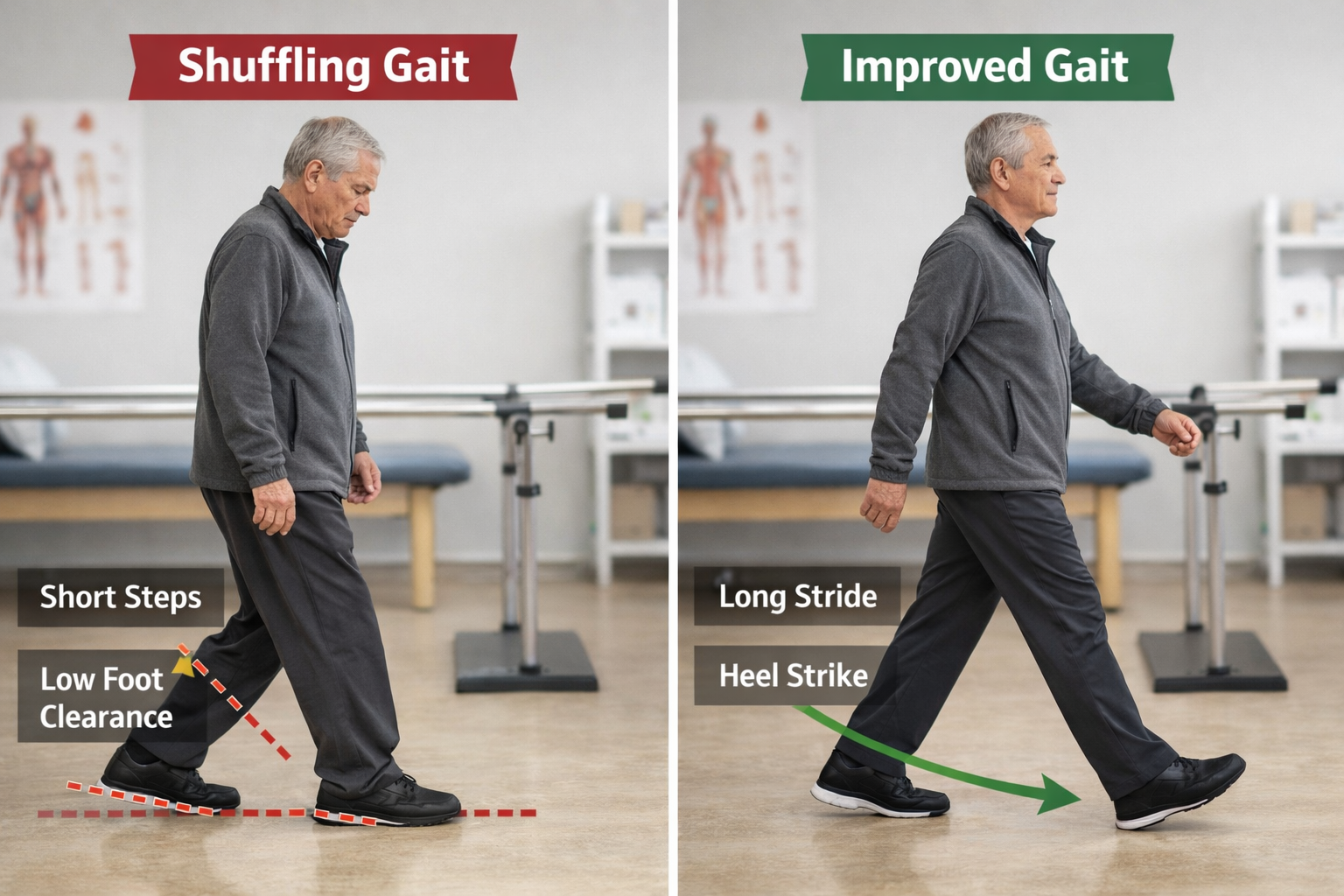
What Is a Shuffling Gait?
Shuffling gait refers to a walking pattern in which the feet appear to slide along the floor rather than lifting fully with each step. This gait abnormality with shuffling feet is typically associated with:
- Shortened step length
- Decreased heel strike
- Reduced walking speed
- Difficulty initiating movement
From a rehabilitation perspective, shuffling gait often reflects impaired motor planning, altered balance control, or reduced sensory feedback—particularly in people with neurological conditions.
Common Causes of Shuffling Gait
Understanding
shuffling gait causes is critical for selecting appropriate treatment strategies. The condition may stem from central nervous system injury, neurodegenerative disease, or age-related functional decline.
Common Causes of Shuffling Gait and Key Clinical Features
Understanding the specific causes of a shuffling gait is critical for selecting appropriate clinical treatment strategies. This condition typically stems from central nervous system damage, neurodegenerative disease, or age-related neuromuscular decline rather than isolated muscle weakness.
| Condition | Key Gait Features | Typical Population |
|---|---|---|
| Parkinson’s disease | Short steps, reduced arm swing, freezing | Older adults |
| Post-stroke (including cerebellar stroke) | Poor coordination, uneven step timing | Stroke survivors |
| Age-related decline | Reduced foot clearance, slower pace | Elderly individuals |
| Neurological disorders | Impaired motor planning and balance | Mixed ages |
A Parkinson’s shuffle gait is one of the most recognized forms, driven by bradykinesia and impaired internal cueing.
Similarly, cerebellar stroke shuffling gait often reflects disrupted coordination and timing, leading to unstable and inefficient walking patterns. In older adults, the causes of shuffling gait in the elderly may include sensory loss, muscle weakness, fear of falling, or multiple contributing factors.
Why Shuffling Gait Requires Targeted Rehabilitation
Left untreated, shuffling gait increases the risk of falls, limits participation in therapy, and reduces quality of life. For individuals with a neurological disorder and feet shuffling gait, standard strengthening alone is often insufficient.
Effective rehabilitation must address:
- Step length and foot clearance
- Gait initiation and rhythm
- Balance and postural control
- Carryover from clinic to home environments
This is where structured gait training and external cueing play a critical role.
Shuffling Gait Treatment and Rehabilitation Options
Evidence-based shuffling gait treatment relies on a combination of physical therapy interventions and consistent practice.
Physical Therapy–Based Interventions
- Task-specific gait retraining
- Balance and postural control exercises
- Strengthening to support propulsion and stability
Exercises to Improve Shuffling Gait
Targeted exercises for shuffling gait may include:
- Step-over drills using visual markers
- Marching exercises to improve foot clearance
- Rhythmic walking with auditory or visual cues
- Turning and start-stop walking practice
When progressed appropriately, these exercises to improve shuffling gait help retrain movement patterns and restore walking confidence.
Supporting Walking Rehabilitation Beyond the Clinic
Many patients struggle to maintain gains once formal therapy sessions end. Individuals with difficulty walking due to shuffling gait often benefit from tools that reinforce correct gait mechanics during daily walking. External cueing strategies—used consistently at home—can help bridge the gap between clinical training and real-world mobility.
Product Integration: Just Walk by Chaban Medical
Just Walk is designed to support walking rehabilitation by providing consistent external cues that encourage longer, more rhythmic steps—key elements often impaired in shuffling gait.
How Just Walk Supports Rehabilitation
- Reinforces physical therapy principles outside the clinic
- Supports patients who walk with shuffling gait due to neurological conditions
- Suitable for Parkinson’s disease, post-stroke recovery, and age-related gait decline
- Easy to integrate into home walking routines or clinic-based programs
Summary
Shuffling gait is a complex but treatable walking disorder when addressed with targeted rehabilitation strategies. By understanding the underlying causes, applying evidence-based exercises, and supporting carryover beyond the clinic, physical therapists and physiotherapy centers can significantly improve patient outcomes.
Explore how structured gait training and supportive tools like Just Walk can enhance walking rehabilitation and help patients move with greater confidence.
FAQ
?Is shuffling gait always related to Parkinson’s disease
No. While Parkinson’s disease is a common cause, shuffling gait can also occur after stroke, in other neurological disorders, and in older adults.
?Can shuffling gait improve with physical therapy
Yes. Many patients show meaningful improvement with targeted gait training and structured exercises.
?Are home exercises effective for shuffling gait
When prescribed by a professional and performed consistently, home programs play a key role in long-term improvement.
?When should someone seek evaluation for shuffling gait
If shuffling gait is new, worsening, or associated with falls, neurological and physical therapy evaluation is recommended.
References
- Morris ME et al. Stride length regulation in Parkinson’s disease. Brain.
- Bohannon RW. Gait performance after stroke. Archives of Physical Medicine and Rehabilitation.
- American Physical Therapy Association (APTA).
Clinical Practice Guidelines for Gait and Balance Disorders.
Important
This article is for informational purposes only and is not a substitute for professional medical advice; always consult your doctor or physical therapist before starting any exercise or using any device