


Walking After Stroke in New York City
Recovering the ability to walk after a stroke is a critical milestone for independence and quality of life. For stroke survivors in
New York City, the urban environment adds unique challenges: crowded sidewalks, frequent stairs, uneven pavement, and fast-paced pedestrian traffic. Understanding these obstacles and effective rehabilitation strategies can make the difference between limited mobility and confident community walking.
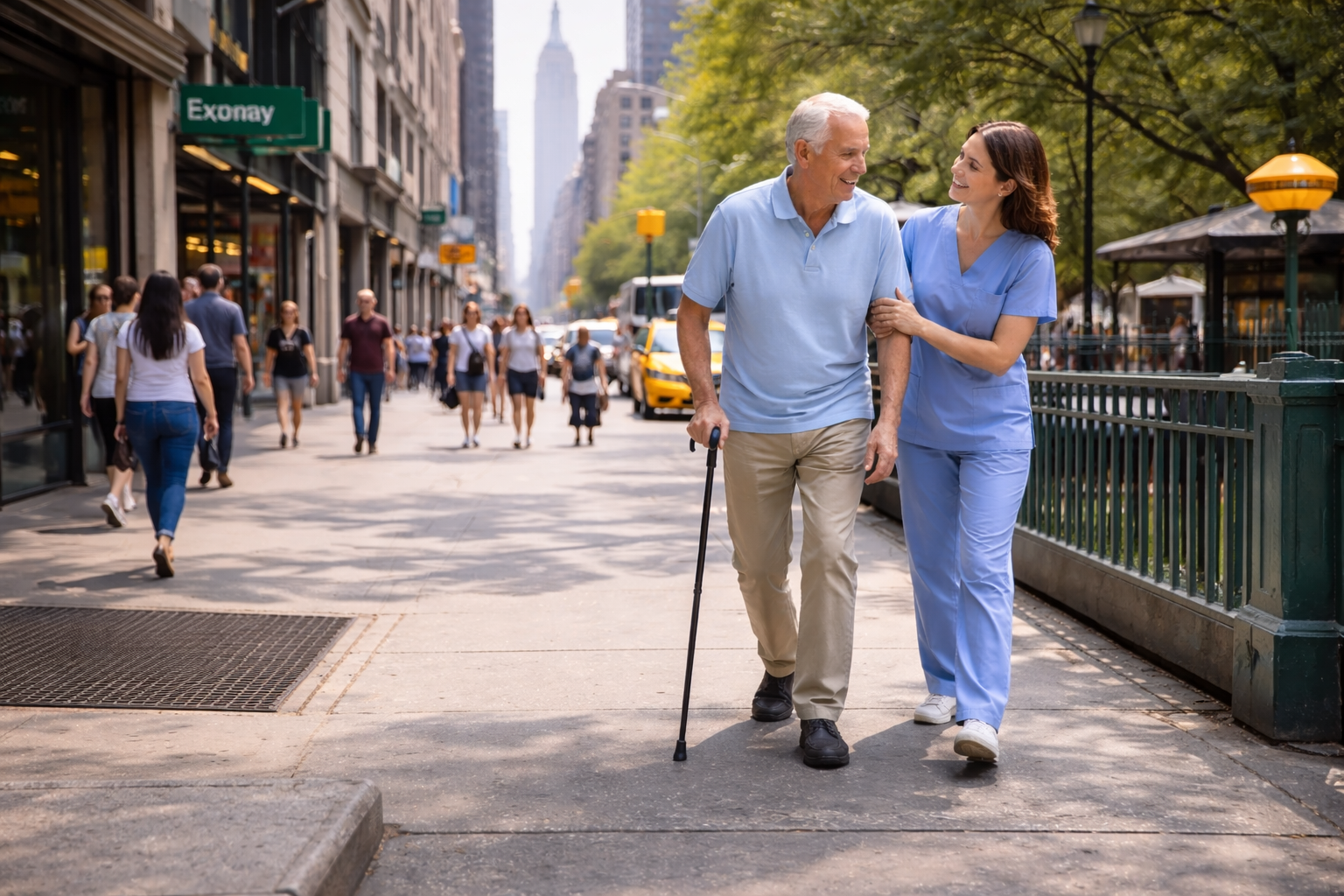
What is Walking After Stroke in New York City?
Walking after stroke refers to the process of regaining safe, functional mobility in daily life. After a stroke, survivors may experience weakness, balance deficits, spasticity, or slowed gait, making it harder to navigate environments safely. In dense urban areas like New York City, these physical challenges intersect with environmental stressors such as crowded streets, narrow sidewalks, and frequent stairs, which can increase the risk of falls and limit independence.
Key factors affecting walking after stroke in NYC include:
- Difficulty navigating crowded sidewalks and intersections
- Challenges with stairs, subway entrances, and curbs
- Uneven pavement and construction zones
- The need for sustained attention and
balance adjustments
Why It Matters / Who It Affects
Mobility limitations after stroke have a direct impact on independence, confidence, and social participation. Research shows that post-stroke individuals often avoid challenging environments, which can reduce overall physical activity and slow recovery (PubMed, 2013).
For residents of New York City, these challenges are amplified due to:
- High pedestrian density
- Public transportation reliance
- Older infrastructure and frequent stairs
Rehabilitation that considers these environmental factors can improve community participation, reduce fall risk, and increase confidence in everyday walking.
Treatment and Rehabilitation Options
Effective rehabilitation combines clinical therapy with real-world practice. Key strategies include:
- Physical therapy (PT) – Focused on strength, balance, and gait retraining.
- Task-specific walking practice – Navigating stairs, uneven surfaces, and crowded areas in controlled environments.
- At-home mobility exercises – Practicing safe walking patterns, using grab bars or parallel bars as needed.
Robotic gait training after stroke – Advanced systems like
Just Walk provide repetitive, task-specific walking practice that mimics real-world conditions, improves endurance, and reduces the strain on therapists while allowing patients to safely practice walking.
Tips and Tools for Patients and Caregivers
- Plan walks during less crowded times to reduce stress and risk.
- Use supportive footwear to navigate uneven sidewalks.
- Break walking practice into short, frequent sessions to avoid fatigue.
- Consider assistive devices recommended by your physical therapist.
- Work with clinicians familiar with urban walking rehabilitation, including robotic gait training, to safely simulate real-world challenges.
Just Walk – Advanced Gait Training for NYC Stroke Survivors
Just Walk stands out as a rehabilitation solution for stroke survivors living in urban environments:
- Practical benefits: Allows safe, repetitive walking practice with adjustable speed and support, mimicking real-world walking demands.
- Target users: Post-stroke patients struggling with community walking, balance, or endurance.
- Use scenarios: Clinic sessions, task-specific gait practice, and early-stage mobility training.
Learn more about Just Walk and how it supports walking recovery in complex urban settings. Click Here
Summary
Walking recovery after stroke in New York City presents unique challenges, from crowded sidewalks to uneven surfaces and stairs. Evidence-based rehabilitation, combined with modern tools like Just Walk, can help survivors regain independence, confidence, and safety.
Take the first step: Consult a qualified physical therapist to design a walking recovery plan tailored to your environment and needs.
FAQ
?Is it safe to walk in crowded areas of New York City after stroke
Walking after stroke in dense urban areas like Manhattan or Brooklyn can be challenging due to crowds and fast pedestrian flow. With proper rehabilitation, safe footwear, and gradual supervised practice, stroke survivors can regain confidence and safely navigate busy sidewalks.
?How can I manage stairs and uneven sidewalks in New York City after stroke
NYC streets often include subway stairs, curb transitions, and uneven pavements. Task-specific training, physical therapy, and tools like Just Walk can improve balance and strength, making these daily obstacles safer to navigate.
?How long after a stroke can I walk independently in New York City
Recovery time varies depending on stroke severity, age, and therapy consistency. Early and consistent rehabilitation tailored to urban challenges — including stairs, curbs, and crowded sidewalks — improves the likelihood of walking independently in NYC environments.
?Can robotic gait training help me walk safely in New York City streets
Yes. Systems like Just Walk provide controlled, repetitive walking practice that mimics real-world urban challenges, helping stroke survivors safely practice balance, endurance, and gait needed for navigating NYC sidewalks and transit areas.
Important
This article is for informational purposes only and is not a substitute for professional medical advice; always consult your doctor or physical therapist before starting any exercise or using any device