


Antalgic Gait: Causes, Treatment & At-Home Rehabilitation
An antalgic gait is one of the most common walking abnormalities seen in rehabilitation and orthopedic clinics. The term “antalgic” literally means “against pain.” When a person experiences pain in the leg, hip, knee, back, or foot, the body naturally adapts the way it walks to reduce pressure on the painful area.
This protective strategy may help reduce discomfort temporarily, but over time it can lead to muscle weakness, joint stiffness, and abnormal movement patterns. Many patients also develop reduced walking confidence and decreased mobility.
The encouraging news is that with appropriate physiotherapy and consistent home-based rehabilitation, most people can restore a more balanced and natural walking pattern.
What Is Antalgic Gait?
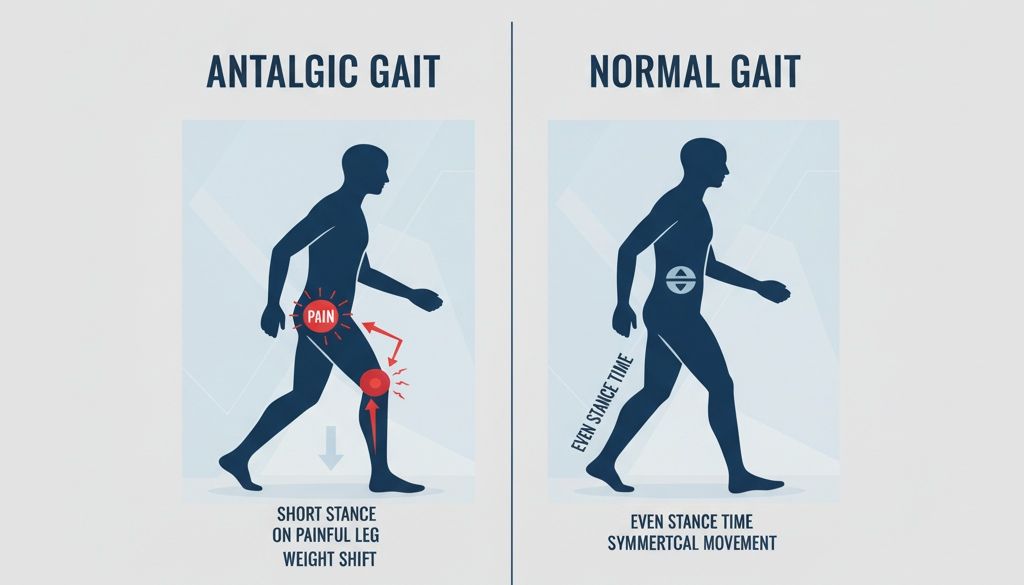
An antalgic gait is a protective walking pattern where a person shortens the stance phase on the painful leg to reduce discomfort. This results in limping, asymmetry, and reduced walking speed.
Common features:
- Short stance time on painful limb
- Longer stance time on the opposite limb
- Reduced step length
- Visible limping or shifting weight away from pain
Antalgic gait vs limp:
A limp can have many causes. An
antalgic gait specifically results from
pain.
Antalgic gait vs ataxic gait:
Ataxic gait is neurological and involves poor coordination not pain.
Key Walking Changes in Antalgic Gait
| Gait Feature | What Happens | What It Looks Like |
|---|---|---|
| Short stance phase | Less time spent on painful leg | Quick step off the painful side |
| Longer stance on opposite leg | Body compensates for pain | Uneven walking rhythm |
| Reduced step length | Smaller steps while walking | Slower walking speed |
| Weight shifting | Pressure moved away from painful area | Visible limp or leaning |
These changes occur automatically as the body attempts to protect the injured or painful area.
Why Antalgic Gait Matters
Although antalgic gait helps reduce pain in the short term, walking this way for long periods can create additional problems.
Common consequences include:
- Overloading the opposite hip, knee, and lower back
- Increased energy expenditure during walking
- Reduced muscle strength in the affected limb
- Joint stiffness and reduced range of motion
- Development of long-term compensatory movement patterns
- Increased risk of secondary injuries
Because of these effects, early intervention and rehabilitation are important.
What Causes Antalgic Gait?
Pain from many musculoskeletal conditions can trigger this gait pattern.
Common Causes of Antalgic Gait
| Cause | Typical Symptoms | Common Patient Groups |
|---|---|---|
| Back pain | Pain during weight-bearing, altered posture | Adults with disc problems or muscle spasms |
| Hip osteoarthritis | Groin pain, stiffness, reduced stride | Older adults |
| Knee osteoarthritis | Knee pain during walking or standing | Middle-aged and older adults |
| Post–knee replacement | Temporary limping during recovery | Post-surgical patients |
| Muscle weakness | Instability or fatigue while walking | Older adults or post-injury patients |
| Foot or ankle injuries | Pain during push-off phase of walking | Athletes or injury recovery |
In many cases, multiple factors contribute simultaneously, such as pain combined with muscle weakness.
Treatment and Rehabilitation Options
Physiotherapy Approaches
Physiotherapy is often the first-line treatment for antalgic gait. The goal is to reduce pain, restore symmetry, and rebuild strength.
Common physiotherapy techniques include:
- Gait retraining
- Range-of-motion exercises
- Strengthening exercises for hip, thigh, and calf muscles
- Manual therapy
- Balance and stability training
A therapist may also evaluate posture, walking mechanics, and muscle imbalances to create a personalized rehabilitation program.
Home Exercises for Antalgic Gait
Many patients benefit from continuing rehabilitation exercises at home between therapy sessions.
Examples include:
- Gentle stepping drills
- Low-resistance cycling
- Glute activation exercises
- Heel-to-toe walking practice
- Balance training (such as supported single-leg standing)
The most important factor is consistency. Performing exercises regularly helps retrain the body to adopt a more natural walking pattern.
At-Home Rehabilitation Strategies
Patients recovering from antalgic gait often need structured daily movement that allows them to practice walking safely.
Effective home rehabilitation focuses on:
- Low-load daily movement
- Repetition of correct walking patterns
- Pain-free mobility drills
- Gradual strengthening of supportive muscles
- Rebuilding confidence in weight-bearing activities
Repetition of correct movement patterns is one of the most effective ways to restore normal walking mechanics.
Comparing Rehabilitation Methods
Several rehabilitation approaches can help improve antalgic gait, and most patients benefit from combining multiple strategies.
Physiotherapy sessions
provide professional guidance and structured gait retraining. A physical therapist can assess walking mechanics, identify muscle imbalances, and design targeted exercises. However, therapy sessions are usually limited to scheduled clinic visits.
Home strengthening exercises
help build muscle support around the hips, knees, and ankles. Regular exercises improve stability and joint control, but progress often depends on patient consistency and motivation.
Walking practice
is another important part of recovery. Practicing normal walking patterns helps retrain the nervous system and restore symmetry. However, pain may limit how much walking a person can tolerate early in rehabilitation.
Low-load gait cycling devices allow patients to practice the walking motion while placing minimal stress on painful joints. This approach can help maintain movement, activate muscles involved in walking, and support rehabilitation between therapy sessions.
For many patients, combining professional therapy with structured home rehabilitation produces the best results and supports a faster return to comfortable walking.
How At-Home Gait Cycling Devices Help
Low-load gait cycling devices allow patients to practice walking mechanics without placing full body weight on painful joints.
Potential benefits include:
- Engaging the walking cycle without excessive stress
- Supporting joint mobility
- Reducing fear of movement
- Activating muscles involved in walking
- Allowing consistent practice between therapy sessions
These devices can be particularly helpful for people experiencing:
- Antalgic gait after knee replacement
- Hip osteoarthritis
- Chronic lower-back pain affecting walking
- Muscle weakness that causes limping
Product Spotlight: Just Walk
The Just Walk device is designed to help retrain the walking cycle at home with minimal joint loading.
Key Advantages
- Lightweight mechanical design with no electricity required
- Provides approximately 500–800 gait cycles per session
- Four adjustable magnetic resistance levels
- Can be used in standing or seated positions
- Suitable for post-operative hip or knee rehabilitation
- Supports daily gait retraining at home
Who May Benefit Most
- Patients with hip or knee osteoarthritis
- Individuals recovering from knee replacement surgery
- Older adults experiencing muscle weakness
- People with chronic back pain affecting walking
- Anyone developing a limp due to pain
By allowing repeated practice of walking mechanics in a controlled environment, devices like Just Walk can support confidence, mobility, and rehabilitation progress.
>>>>>>Explore Just walk Here<<<<<<
Summary
Antalgic gait is a common pain-related walking pattern in which people reduce weight-bearing on a painful leg. Although this adaptation helps protect injured areas initially, long-term limping can lead to muscle weakness, joint stiffness, and additional mobility problems.
Early rehabilitation is key. Physiotherapy, strengthening exercises, and consistent at-home practice can help restore a more natural walking pattern. In some cases, low-load gait training devices can provide additional support by allowing patients to practice walking movements safely and repeatedly.
With the right approach, many individuals can regain comfortable, confident walking and return to daily activities.
FAQ
?Can antalgic gait cause long-term damage
Yes. Long-term compensation can overload other joints and lead to hip, knee, or lower-back problems.
?How long does antalgic gait last after knee replacement
Many patients recover within 6–12 weeks, although weakness or persistent pain may prolong symptoms.
?Can antalgic gait be treated at home
Yes. Home exercises, strengthening programs, and structured gait practice can significantly improve recovery.
?Is antalgic gait the same as ataxic gait
No. Antalgic gait is caused by pain, while ataxic gait results from neurological coordination problems.
Sources & References
- American Physical Therapy Association (APTA)
- American Academy of Orthopaedic Surgeons (AAOS)
Important
This article is for informational purposes only and is not a substitute for professional medical advice; always consult your doctor or physical therapist before starting any exercise or using any device
Just Walk Official Distributor: +1-914-345-9300 Or +1-800-431-2830 👉 Become a Just Walk Distributor