


Freezing of Gait
Freezing of gait (FOG) is one of the most disabling walking problems seen in neurological conditions. Patients often describe it as feeling as if their feet are “glued to the floor,” especially when starting to walk, turning, or approaching obstacles. These episodes can significantly increase the risk of falls, reduce independence, and cause fear and frustration for both patients and caregivers.
Understanding the causes of freezing of gait and knowing which treatment and rehabilitation strategies can help is essential for improving safety and mobility.
What Is Freezing of Gait?
Freezing of gait is a sudden, brief inability to initiate or continue walking, despite the intention to move. It most commonly affects individuals with neurological disorders and is characterized by short, shuffling steps or complete stopping.
Freezing episodes often occur:
- At gait initiation
- During turning
- In narrow spaces or doorways
- Under stress or dual-task situations
Why Freezing of Gait Matters and Who It Affects
Freezing of gait is strongly associated with:
- Falls and fall-related injuries
- Loss of confidence while walking
- Reduced quality of life
- Increased caregiver burden
Common conditions associated with freezing of gait:
- Freezing of gait in Parkinson’s disease
- Freezing of gait in dementia, especially Lewy body dementia
- Freezing of gait without Parkinson’s, including after stroke or other brain injuries
Importantly, freezing of gait is not only a Parkinson’s symptom — this misconception often delays proper rehabilitation.
Causes of Freezing of Gait
The causes of freezing of gait are complex and involve disrupted communication between the brain regions responsible for movement planning, timing, and execution.
Key contributing factors include:
- Impaired motor planning
- Reduced automatic walking patterns
- Cognitive load and attention deficits
- Balance and postural instability
In Parkinson’s disease, freezing of gait is closely linked to disease progression and is a major contributor to falls.
Chart: Common Triggers of Freezing of Gait and Rehab Focus
| Trigger | What Happens | Why Freezing Occurs | Rehabilitation Focus |
|---|---|---|---|
| Gait initiation (starting to walk) | Feet feel “stuck” when trying to take the first step | Impaired motor planning and reduced automatic movement | Task-specific gait initiation training |
| Turning or changing direction | Sudden stopping or shuffling during turns | Increased cognitive and balance demands | Turning practice with controlled repetition |
| Narrow spaces (doorways, crowds) | Freezing episodes increase | Visual and spatial processing overload | Environmental cue training and step consistency |
| Dual-task walking (talking, thinking) | Walking stops when attention shifts | Limited ability to divide attention | Single-task gait retraining progressing to dual-task |
| Stress or anxiety | Freezing worsens under pressure | Heightened cognitive load affects motor control | Confidence-building, repetitive walking practice |
| Fatigue | Increased freezing later in the day | Reduced neuromuscular control | Neuromotor stabilization protocols combined with systematic energy conservation and pacing strategies |
Treatment and Rehabilitation Options for Freezing of Gait
Can Freezing of Gait Be Cured?
Currently, freezing of gait cannot be fully cured, but it can often be significantly improved with targeted treatment and rehabilitation.
Freezing of Gait Treatment Approaches
- Medication optimization (especially in Parkinson’s disease)
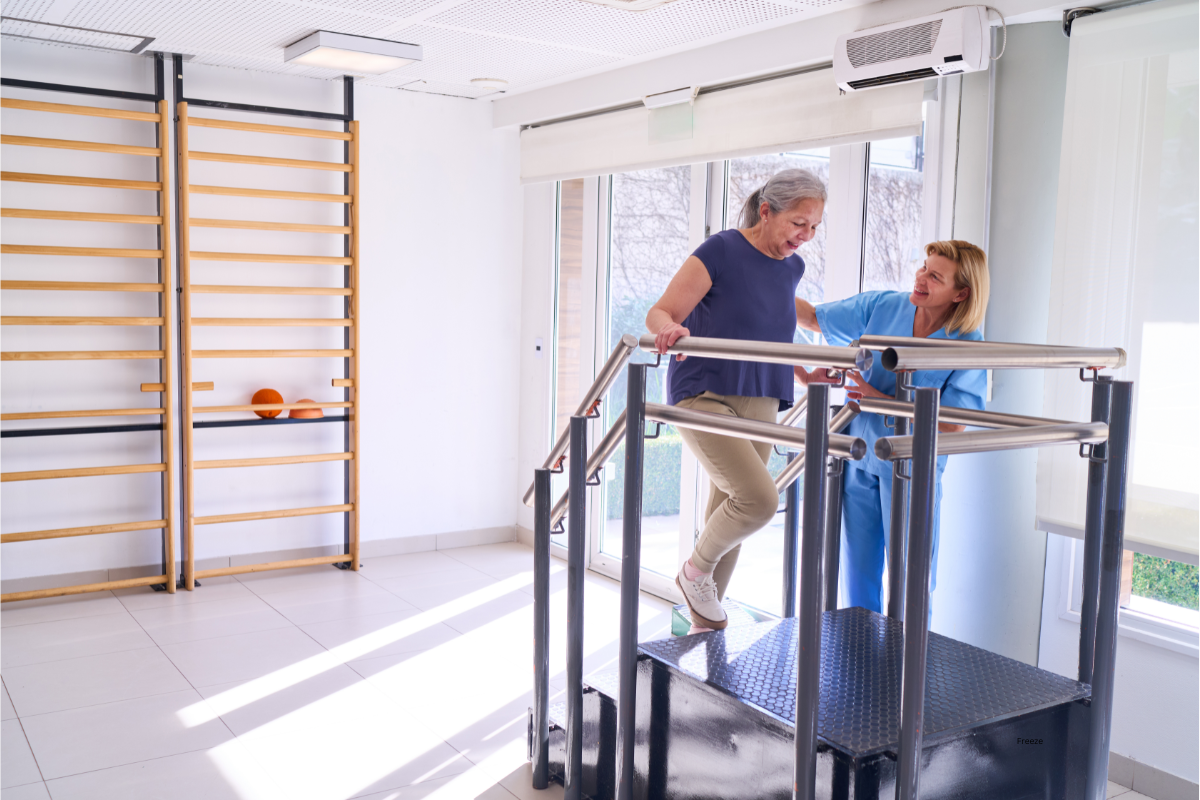
- Physical therapy for freezing of gait
- Task-specific gait retraining
- Balance and coordination training
Freezing of Gait Exercises
Effective exercises focus on:
- Repetitive stepping patterns
- Cue-based walking strategies
- Improving gait initiation and rhythm
- Reducing hesitation during turns
Exercise alone is often not enough —
how walking is practiced matters.
Is There a Device That Helps With Freezing of Gait?
Yes. Rehabilitation devices designed for neurological gait retraining can support traditional therapy by providing structured, repetitive walking practice in a safe environment.
Devices that help with freezing of gait focus on:
- Reinforcing consistent stepping patterns
- Reducing cognitive load during walking
- Supporting balance while encouraging active movement
These tools are particularly valuable for patients who experience freezing of gait and falls in Parkinson’s disease or other neurological conditions.
Product Differentiation: Just Walk by Chaban Medical
Just Walk is a neuromotor walking rehabilitation system designed specifically for individuals with neurological walking impairments, including freezing of gait.
How Just Walk Stands Out
- Designed for neurological gait disorders, not general fitness
- Supports task-specific, repetitive walking training
- Can be used in clinical settings or at home under guidance
- Complements physical therapy for freezing of gait rather than replacing it
Who Can Benefit Most
- Patients with Parkinson’s disease experiencing freezing episodes
- Individuals with freezing of gait without Parkinson’s (post-stroke, brain injury)
- Patients with gait instability and high fall risk
Summary
Freezing of gait is a serious but manageable walking disorder. While it cannot be cured, early recognition, proper physical therapy, targeted exercises, and the right rehabilitation tools can significantly improve walking safety and confidence.
If you or someone you care for experiences freezing of gait, consulting a rehabilitation professional and exploring neuromotor gait training options may make a meaningful difference.
FAQ
?What causes freezing of gait
Freezing of gait is caused by disrupted motor planning and coordination in the brain, often due to neurological disease.
?Can freezing of gait happen without Parkinson’s disease
Yes. Freezing of gait without Parkinson’s can occur after stroke, brain injury, or in certain types of dementia.
?What is the best physical therapy for freezing of gait
Physical therapy for freezing of gait focuses on task-specific walking practice, cueing strategies, and balance training.
?Is there a device that helps with freezing of gait
Yes. Neurological rehabilitation devices designed for gait retraining can help reduce freezing episodes when used alongside therapy.
References
- Nutt JG et al. Freezing of gait: moving forward on a mysterious clinical phenomenon. Lancet Neurology.
- Parkinson’s Foundation. Freezing of Gait.
- American Physical Therapy Association (APTA) – Neurological Rehabilitation Guidelines.
Important
This article is for informational purposes only and is not a substitute for professional medical advice; always consult your doctor or physical therapist before starting any exercise or using any device
Just Walk Official Distributor: +1-914-345-9300 Or +1-800-431-2830 👉 Become a Just Walk Distributor