


Hip Pain When Walking: Causes, Relief, and Warning Signs
Hip pain when walking can make everyday activities difficult. You may notice a dull ache in your groin, sharp pain along the outside of your hip, or stiffness that increases the longer you walk. Sometimes the discomfort disappears when you sit down. In other cases, it continues when you lie down at night.
The cause is not always the hip joint itself. Muscles, tendons, nerves, and structures in the lower back can produce pain around the hip. Some people also experience hip discomfort while recovering from surgery or managing neurological conditions that affect their walking patterns.
Understanding these possibilities is important because treatment depends on the underlying cause.

What Causes Hip Pain When Walking?
Hip pain during walking can develop from joint conditions, muscle or tendon problems, surgical recovery, or changes in walking patterns. The table below summarizes the main possibilities.
| Cause | How it may affect walking |
|---|---|
| Hip osteoarthritis | Joint pain and stiffness, often felt in the groin or thigh, can make walking and climbing stairs difficult. |
| Hip replacement and recovery | Pain, swelling, and temporary muscle weakness may affect walking after surgery. Persistent or worsening pain requires assessment. |
| Greater trochanteric pain syndrome (GTPS) | Causes pain on the outside of the hip, often aggravated by walking, climbing stairs, or lying on the affected side. |
| Muscle strains and tendon problems | Injured or overloaded muscles and tendons may cause pain during movement or weight-bearing. |
| Hip impingement and labral tears | May cause groin pain, stiffness, or catching sensations, including in younger adults. |
| Stress fractures and osteonecrosis | Bone conditions that may cause hip or groin pain during walking and require medical evaluation. |
| Lower back conditions | Pain originating in the lumbar spine may be felt around the hip, buttock, or leg. |
| Stroke | Weakness, spasticity, and altered walking patterns may contribute to musculoskeletal discomfort. |
| Multiple sclerosis (MS) | Muscle weakness, spasticity, and balance problems can change walking mechanics and may contribute to discomfort. |
| Parkinson's disease | Rigidity and movement difficulties may cause stiffness or musculoskeletal pain and affect walking. |
| Cerebral palsy | Changes in muscle tone and joint alignment can affect walking; hip problems may also cause pain. |
| Traumatic brain injury (TBI) | Weakness, balance problems, or associated orthopedic injuries may affect walking and contribute to discomfort. |
These conditions can produce overlapping symptoms. The location of the pain, medical history, physical examination, and sometimes imaging are needed to determine the cause.
Hip Pain Before and After Hip Replacement
Hip replacement may be recommended when severe hip osteoarthritis causes significant pain, stiffness, or loss of function and nonsurgical treatment no longer provides adequate relief. Following surgery, some pain, swelling, and difficulty walking are expected during the initial recovery period. Rehabilitation commonly includes gradually increasing walking activity, strengthening exercises, and learning to move safely.
Patients may initially need a walker, crutches, or a cane. Weight-bearing instructions and movement precautions depend on the operation and the surgeon's recommendations. Although recovery takes time, pain should generally improve. Increasing pain, fever, wound drainage, or unusual swelling requires medical attention. Persistent pain after
hip replacement
should be evaluated rather than assumed to be a normal part of recovery.
How Neurological Conditions Can Affect the Hip
Neurological conditions such as stroke, MS, Parkinson's disease, cerebral palsy, and TBI can interfere with the control and coordination of walking. For example, weakness after a stroke may affect how a person advances one leg or transfers weight during walking. MS can cause muscle weakness, spasticity, and balance problems, while Parkinson's disease can produce rigidity and changes in movement.
These impairments may alter the demands placed on muscles and joints. However, a person with a neurological condition can also develop hip osteoarthritis, tendon problems, or another orthopedic condition unrelated to the neurological diagnosis.
For this reason, rehabilitation may need to address both the source of pain and the person's walking difficulties.
Where Is Your Hip Pain Located?
The location of the pain can provide useful diagnostic clues, although it cannot identify the cause on its own.
| ain location | Possible explanation |
|---|---|
| Front of the hip or groin | Osteoarthritis, hip impingement, labral injury, or hip flexor problems |
| Outside of the hip | Greater trochanteric pain syndrome or gluteal tendon problems |
| Back of the hip or buttock | Lower back disorders, deep gluteal problems, or hamstring injuries |
| Hip pain extending into the thigh | Hip joint disorders or referred pain |
| Pain after hip replacement | Postoperative discomfort or a complication requiring assessment |
What Can Cause Hip Pain in a Woman?
Women can experience the same joint, muscle, and tendon conditions as men. However, GTPS is more commonly associated with female sex, particularly in middle age.
When a woman experiences pain in the right hip area, the affected side alone does not identify the cause. The location of the discomfort, associated symptoms, and activities that make it worse are more useful diagnostic clues.
Some pelvic or gynecologic conditions can also produce pain perceived around the hip or groin. A medical assessment may therefore consider symptoms beyond the musculoskeletal system.
Why Does My Right Hip Joint Hurt When Walking?
Pain in the right hip joint when walking may arise from osteoarthritis, hip impingement, a labral injury, or another condition affecting the joint or surrounding tissues.
The same causes can affect the left hip. A clinician may assess hip movement, muscle strength, tenderness, and walking patterns to identify the likely source.
Why Does Hip Pain Continue When Sitting or Lying Down?
The relationship between pain and body position can help narrow down possible explanations.
Right Hip Pain When Walking and Sitting
Hip osteoarthritis can cause discomfort during both walking and prolonged sitting. Hip impingement and labral problems may also become painful when the hip remains bent for extended periods.
GTPS can sometimes cause discomfort during prolonged sitting as well. Because several conditions share these symptoms, pain during both activities does not point to a single diagnosis.
Hip Pain When Walking and Lying Down
Pain along the outside of the hip that becomes worse when lying on the affected side is characteristic of GTPS. Hip osteoarthritis can also cause nighttime discomfort, particularly as symptoms become more advanced.
Following hip replacement, patients should follow their surgeon's instructions about safe sleeping positions and report pain that is worsening rather than improving. If hip pain regularly disrupts sleep, medical evaluation is recommended.
Sudden Hip Pain Without Injury
Sudden hip pain is not always associated with a fall or an obvious injury. However, severe pain that begins abruptly without trauma should not be dismissed. A hot or swollen hip, fever, or feeling generally unwell may indicate a condition requiring urgent medical attention. Seek urgent medical care for sudden severe hip pain, even if you cannot identify an injury. If you cannot stand or bear weight on the affected leg, seek emergency evaluation.
Should You Keep Walking With Hip Pain?
The answer depends on the underlying condition and the severity of the symptoms. For people with hip osteoarthritis, regular therapeutic exercise is an important part of treatment. Appropriate activity can help maintain strength, joint function, and mobility.
Some discomfort when beginning an exercise program does not necessarily mean the joint is being damaged. However, the activity should be appropriate for the diagnosis, and severe or progressively worsening pain requires reassessment.
After hip replacement, walking is an important part of rehabilitation, but patients must follow their surgeon's instructions regarding weight-bearing, movement precautions, and progression of activity. People with neurological walking difficulties may require a supervised rehabilitation program that addresses balance, strength, and movement control.
How to Relieve Hip Pain When Walking
Adjust your activity. Reduce or temporarily avoid activities that significantly aggravate your symptoms. Depending on the diagnosis, lower-impact activities such as cycling or swimming may be suitable.
Follow an appropriate strengthening program. Exercises targeting the hip and surrounding muscles can improve strength and function. The specific exercises should match your condition and rehabilitation needs.
Consider physical therapy. A physical therapist can assess muscle strength, range of motion, balance, and walking mechanics. Treatment may include strengthening, mobility exercises, and gait training.
Ask about walking aids when needed. For some people with hip osteoarthritis or mobility limitations, a cane, crutches, or walker may improve walking safety and function.
Discuss pain management with your healthcare provider. Medication and other treatment options may be appropriate, depending on the diagnosis and medical history.
Follow postoperative instructions. After hip replacement, rehabilitation should respect the surgeon's restrictions and the patient's stage of recovery.
There is no single exercise or treatment that works for every cause of hip pain. Identifying the underlying condition is essential.
How Walking Rehabilitation Can Support Mobility
Hip pain and walking difficulties can influence one another. Pain may cause someone to shorten their steps or limp. Muscle weakness, reduced joint movement, or neurological impairments can also affect walking patterns.
A rehabilitation assessment may include observing walking speed, step length, balance, muscle strength, and the way weight is transferred between the legs.
The appropriate rehabilitation program depends on the diagnosis. For someone with hip osteoarthritis, treatment may focus on strengthening and maintaining joint function. Following hip replacement, rehabilitation commonly involves gradually restoring movement, strength, and walking independence.
For people with neurological impairments, rehabilitation may also address movement coordination, muscle tone, balance, and motor control.
Just Walk: A Wearable Neuromotor Rehabilitation Device
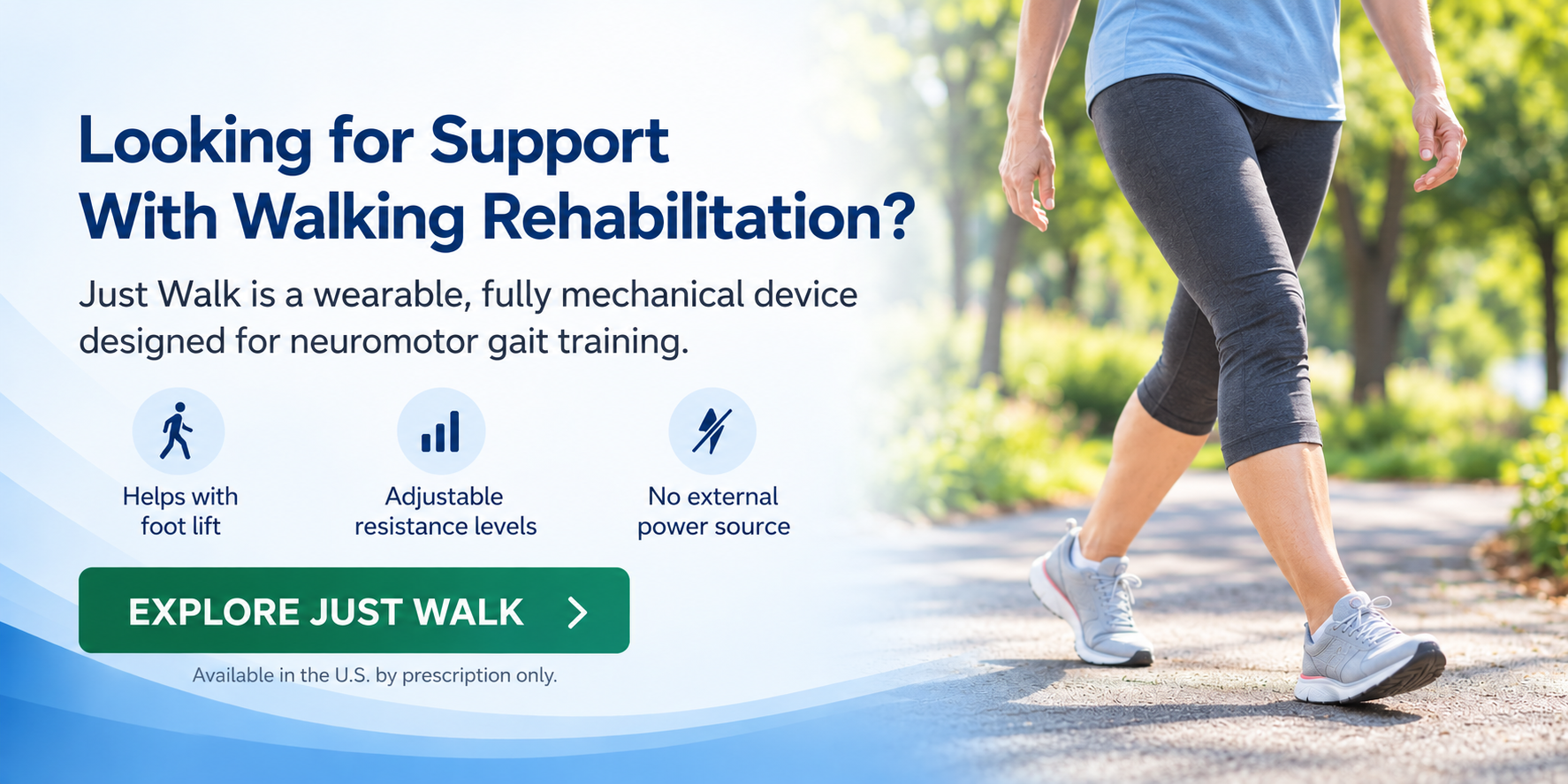
Just Walk by Chaban Medical is a wearable, fully mechanical device designed for walking rehabilitation. The system uses a magnetic mechanism that assists with foot lift at the beginning of a step and provides adjustable resistance as the leg moves forward. It offers four resistance levels and does not require an external electrical power source.
Chaban Medical describes potential applications involving neurological impairments, including stroke, MS, Parkinson's disease, cerebral palsy, and TBI, as well as orthopedic rehabilitation.
Learn more about Just Walk and its rehabilitation applications.
Moving Toward More Comfortable Walking
Hip pain when walking can arise from several different conditions. Joint disease, tendon problems, lower back disorders, postoperative recovery, and neurological walking impairments may all be relevant, but they require different approaches.
For many musculoskeletal conditions, appropriate exercise and physical therapy can help maintain mobility and function. After hip replacement, rehabilitation plays an important role in recovery.
When neurological impairments affect walking, treatment may also need to address balance, coordination, and movement control.
If hip pain is limiting your activities or changing the way you walk, a professional assessment can help identify the cause and guide appropriate treatment.
Chaban Medical provides information about Just Walk for patients and rehabilitation professionals exploring neuromotor gait-training technologies.
FAQ
?Is walking good for hip pain
Walking can be beneficial for some conditions, including hip osteoarthritis, when performed at an appropriate level. The amount and type of activity should be adjusted to the diagnosis and symptoms. Following hip replacement, walking should progress according to the surgical team's instructions.
?Why does my hip hurt when walking but not when sitting
Walking places demands on the hip joint, muscles, and tendons. Certain conditions become more symptomatic during weight-bearing activity. However, this pattern alone cannot identify the cause.
?Is hip pain normal after hip replacement
Some discomfort is expected during early recovery. Pain should generally improve as healing progresses. Increasing or persistent pain, especially when accompanied by fever, wound changes, or unusual swelling, requires medical assessment.
?Can neurological conditions contribute to hip pain when walking
Neurological conditions can affect walking mechanics, muscle tone, balance, and strength. These changes may contribute to musculoskeletal discomfort in some people. However, hip pain may also have an independent orthopedic cause that requires evaluation.
Sources & References
- Chamberlain R. Hip Pain in Adults: Evaluation and Differential Diagnosis. American Family Physician. 2021;103(2):81–89.
- American Academy of Orthopaedic Surgeons. Activities After Total Hip Replacement.
- National Institute for Health and Care Excellence. Osteoarthritis in Over 16s: Diagnosis and Management.
- National Health Service. Hip Pain in Adults.
- Parkinson's Foundation. Rigidity.
- National Institute for Health and Care Excellence. Cerebral Palsy in Under 25s: Assessment and Management.
- Mizrachi N, Treger I, Melzer I. Effects of Mechanical Perturbation Gait Training on Gait and Balance Function in Patients With Stroke: A Pre-Post Research Study. Journal of Clinical Neuroscience. 2020;78:301–306.
- Chaban Medical.
Just Walk: Walking Rehabilitation Device.
Important
This article is for informational purposes only and is not a substitute for professional medical advice; always consult your doctor or physical therapist before starting any exercise or using any device
Just Walk Official Distributor: +1-914-345-9300 Or +1-800-431-2830 👉 Become a Just Walk Distributor