


Festinating Gait: Causes, Symptoms, and Treatment
Walking should feel controlled and predictable. For people experiencing festinating gait, however, walking can gradually become more difficult to control. Steps may become shorter and faster, the body may lean forward, and slowing down or stopping can become challenging. These changes can make everyday activities more difficult and may increase the risk of losing balance or falling.
Festinating gait is most commonly associated with neurological conditions, particularly Parkinson’s disease. Recognizing the pattern and understanding why it occurs can help patients, caregivers, and healthcare professionals identify appropriate rehabilitation strategies.
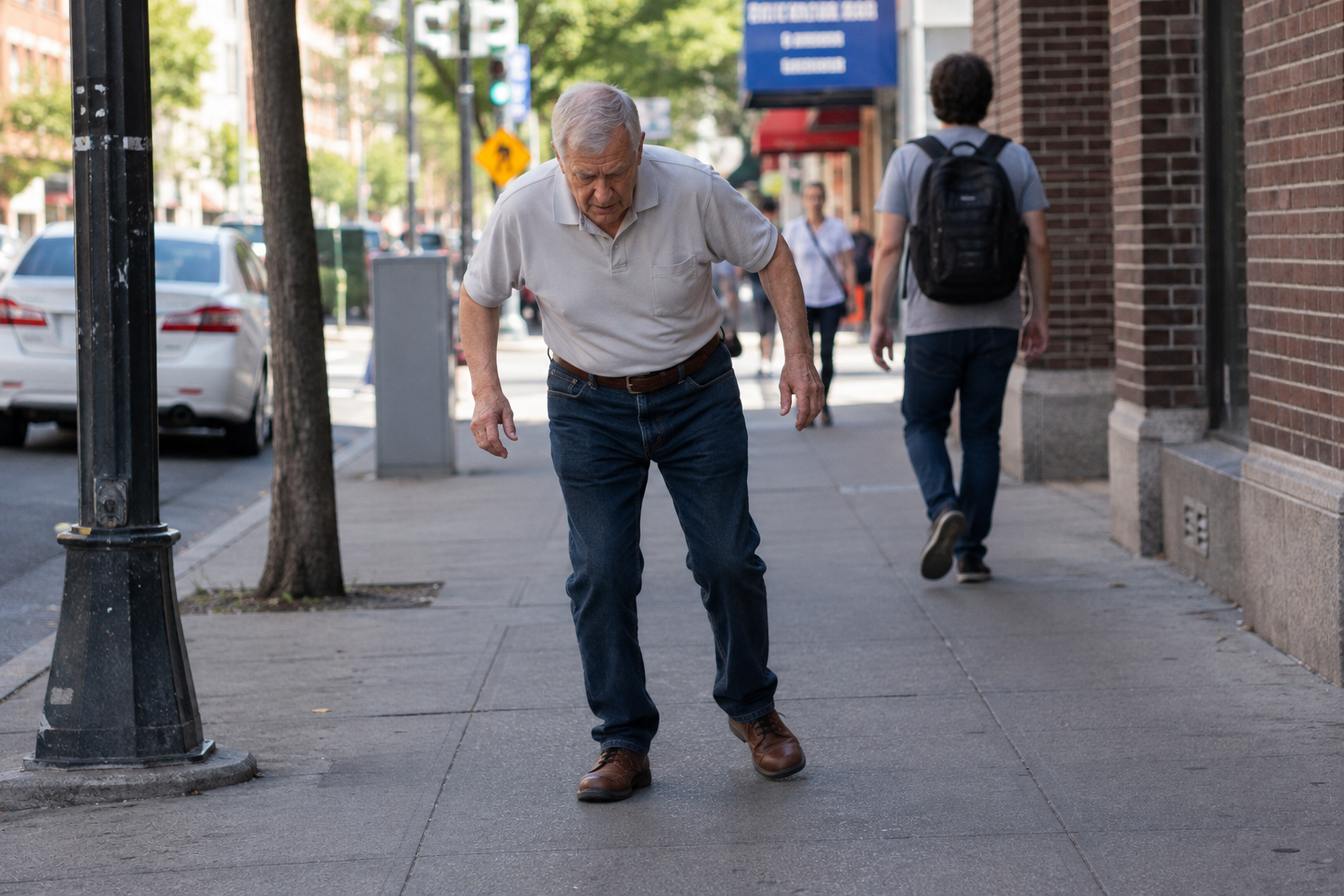
What Is Festinating Gait?
Festinating gait is a walking pattern characterized by increasingly rapid, short steps. A person may appear to be involuntarily speeding up while walking, with the steps becoming progressively smaller.
Festination is not simply walking quickly. The person may have difficulty voluntarily controlling the pace and length of their steps. A forward-leaning posture can contribute to the sensation of being pulled or propelled forward.
Common characteristics of festinating gait include:
- Short, shuffling steps
- Increasing step frequency
- Difficulty slowing down while walking
- A tendency to lean forward
- Difficulty stopping safely
- Reduced control during changes in walking speed
- Increased instability, particularly when turning or navigating crowded spaces
Because these changes can affect walking control, people experiencing festination may become concerned about falling or avoid activities that require walking outside the home.
What Causes Festinating Gait?
Festinating gait is generally associated with problems affecting the neurological systems responsible for movement control. It is particularly common in people with Parkinson’s disease, although gait abnormalities can have different causes and should be professionally evaluated.
In Parkinson’s disease, changes in movement initiation, postural control, stride length, and the ability to regulate walking can contribute to festination.
Other factors may also influence walking performance, including:
- Balance impairments
- Reduced muscle strength
- Changes in posture
- Difficulty with motor planning
- Medication-related fluctuations
- Fatigue
- Fear of falling
- Other neurological or movement disorders
Because several factors can contribute to changes in walking, a healthcare professional or rehabilitation specialist should assess the individual rather than assuming that festinating gait has one specific cause.
Festinating Gait and Parkinson’s Disease
Festination is a well-known walking problem associated with Parkinson’s disease. Changes in the brain's movement-control systems can affect a person's ability to regulate stride length, walking speed, and posture.
A person may begin walking normally but gradually take smaller and faster steps. This can create a feeling that the feet are trying to catch up with the body's forward movement.
Festination can also occur alongside other Parkinson’s-related walking difficulties, including difficulty initiating movement, turning, and maintaining balance.
Importantly,
festinating gait and
freezing of gait are not the same thing. During freezing, a person may temporarily feel as though their feet are stuck to the floor and be unable to initiate or continue a step. Festination, by contrast, involves increasingly rapid and shortened steps. The two problems can occur in the same person and may both require targeted gait rehabilitation.
How Can Physical Therapy Help Festinating Gait?
Physical therapy for festinating gait focuses on improving walking control, balance, posture, and the ability to safely start, stop, and change direction.
A physical therapist may evaluate:
- Step length and walking speed
- Balance and postural stability
- Turning ability
- Ability to start and stop walking
- Lower-extremity strength
- Coordination
- Walking safety
- Environmental factors that make symptoms worse
Depending on the individual's needs, rehabilitation may incorporate structured gait training and external cues.
External Cues During Walking
Some people with neurological gait disorders can benefit from external cues that help organize movement. These may include visual, auditory, or rhythmic cues.
Examples can include:
- Stepping toward visual targets
- Walking to a consistent rhythm
- Deliberately focusing on longer steps
- Practicing controlled starts and stops
- Using specific strategies for turning
A rehabilitation professional can determine which techniques are appropriate and teach the person how to use them safely.
Balance and Postural Training
Balance training may also be an important component of rehabilitation. Improving postural control can help a person respond more effectively to changes in position and movement.
Treatment may include exercises designed around:
- Weight shifting
- Standing balance
- Controlled changes of direction
- Functional reaching
- Sit-to-stand movements
- Walking under different conditions
The appropriate program depends on the individual's abilities, symptoms, medical history, and safety needs.
Can Gait Rehabilitation Help Improve Walking?
Gait rehabilitation is designed to help people practice the specific movements and strategies required for safer, more controlled walking.
For someone with festinating gait, rehabilitation may focus on developing greater awareness and control of:
- Step length
- Walking rhythm
- Walking speed
- Posture
- Direction changes
- Starting and stopping
- Balance during movement
Consistent, appropriately supervised practice can be an important part of neurological rehabilitation. For some individuals, structured walking practice may also be incorporated into a home rehabilitation program.
However, rehabilitation should be individualized. A person who frequently loses balance, freezes, or has difficulty controlling their walking should receive an appropriate professional assessment before beginning a new exercise or walking program.
Can At-Home Walking Rehabilitation Support Recovery?
Rehabilitation does not necessarily stop when a therapy session ends. Depending on the individual's condition and treatment plan, practicing appropriate movements at home may help reinforce skills developed during therapy.
Wearable neuromotor rehabilitation technologies may provide another way to incorporate structured walking practice into an individual's rehabilitation routine.
Just Walk™ by Chaban Medical is a wearable neuromotor rehabilitation device designed to support walking rehabilitation. Unlike a cane or walker, it is not intended to provide physical support for walking or replace a mobility aid. It is designed to be used as part of a rehabilitation approach focused on neuromotor walking practice.
For individuals who may benefit from structured walking rehabilitation, the appropriate use of a device should be determined in accordance with their clinical needs and healthcare professional's recommendations.
When Should Someone With Festinating Gait Seek Professional Help?
New or worsening changes in walking should not be ignored, particularly when they interfere with daily activities or increase the risk of falling.
A professional evaluation is especially important when someone experiences:
- Repeated falls or near-falls
- Rapidly worsening walking difficulties
- New problems with balance
- Frequent freezing episodes
- Difficulty stopping or changing direction
- Significant changes in walking after a medication change
- New neurological symptoms
A physical therapist, neurologist, or other qualified healthcare professional can help determine the underlying cause and develop an appropriate management or rehabilitation plan.
Summary
Festinating gait is characterized by increasingly short and rapid steps and is commonly associated with Parkinson’s disease and other neurological movement disorders. It can affect a person's ability to control walking speed, maintain balance, and stop safely.
Physical therapy and gait rehabilitation can address factors such as step length, balance, posture, walking rhythm, and movement control. External cueing and structured walking practice may also be incorporated when appropriate.
Because festination can have different causes and may occur alongside other gait problems, professional assessment is important. An individualized rehabilitation program can help determine which strategies and tools are appropriate for each person.
FAQ
?What is festinating gait
Festinating gait is a walking pattern in which steps become progressively shorter and faster. It is commonly associated with Parkinson’s disease and other neurological conditions.
?What causes festinating gait
Festination is most commonly associated with neurological disorders that affect movement control, particularly Parkinson’s disease. Balance problems, postural changes, medication effects, and other neurological factors may also contribute.
?Can physical therapy help festinating gait
Physical therapy can address walking control, balance, posture, step length, turning, and other factors that affect mobility. Treatment is individualized according to the person's condition and rehabilitation goals.
?Is festinating gait the same as freezing of gait
No. Festination involves increasingly rapid, shortened steps, while freezing of gait involves a temporary inability or difficulty initiating or continuing a step. They can occur together, particularly in people with Parkinson’s disease.
?Can walking rehabilitation be performed at home
Some people may be able to continue appropriate rehabilitation exercises and walking practice at home as part of a professionally designed program. The appropriate activities depend on the individual's abilities and safety needs.
Sources & References
Important
This article is for informational purposes only and is not a substitute for professional medical advice; always consult your doctor or physical therapist before starting any exercise or using any device