


Knee Pain When Walking: Causes, Symptoms & Relief
A short walk around the neighborhood, a trip to the grocery store, or simply moving from one room to another shouldn't have to be a painful experience. Yet knee pain when walking can make even familiar activities uncomfortable.
Sometimes the discomfort develops gradually. Other times, a sharp pain appears unexpectedly, or the knee begins to hurt only when bending, straightening, or climbing stairs. Some people experience swelling or stiffness, while others have knee pain without any visible swelling.
Understanding what may be causing the pain is the first step toward finding appropriate relief. It also helps to recognize when changes in activity, strengthening exercises, or walking rehabilitation may be beneficial.
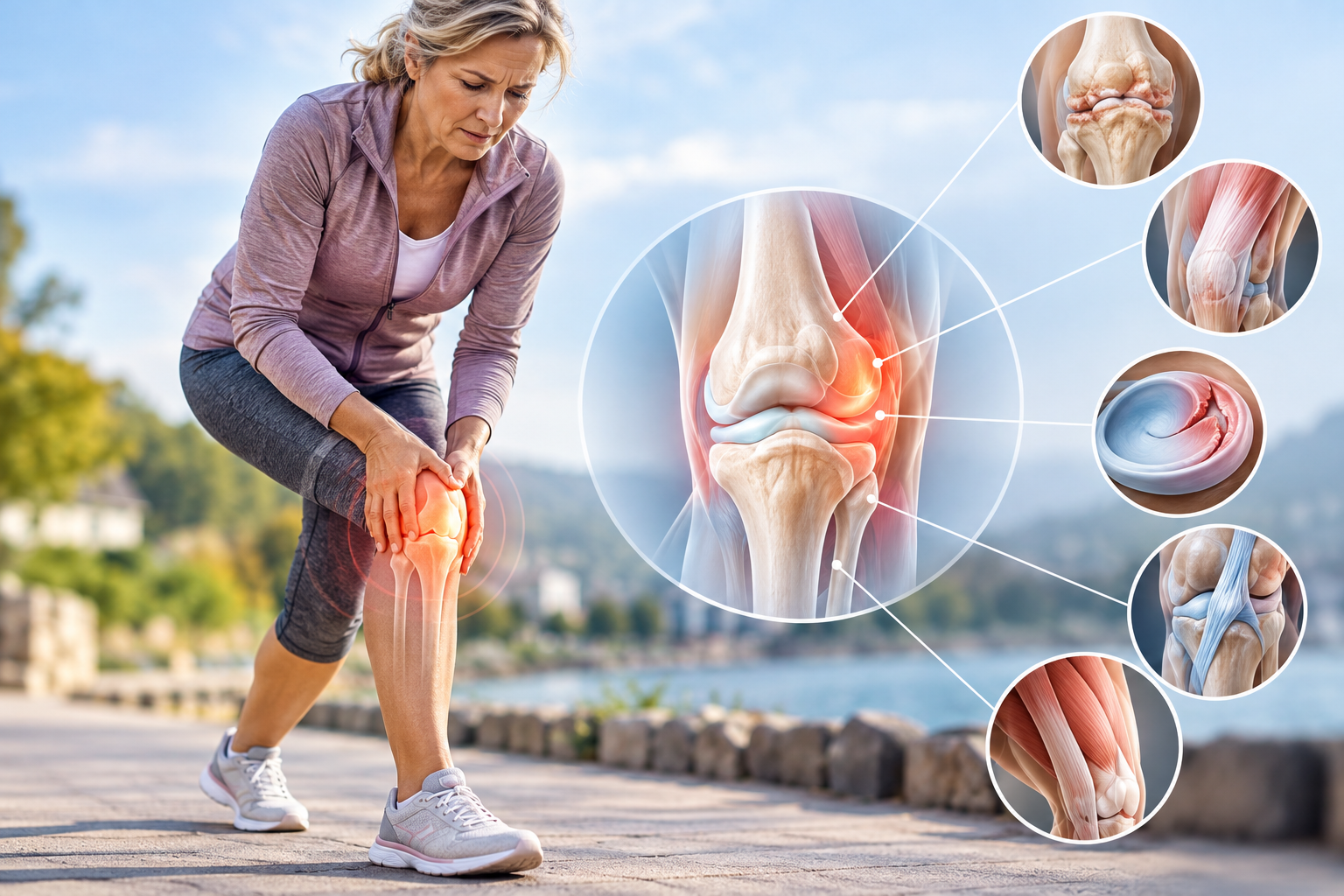
Why Does My Knee Hurt When I Walk?
The knee is a complex joint involving bones, cartilage, ligaments, tendons, and muscles. These structures work together to support body weight and allow the leg to bend, straighten, and move smoothly.
Knee pain can develop when one or more of these structures becomes irritated, injured, or affected by an underlying condition.
| Cause | What happens? | Common symptoms and triggers |
|---|---|---|
| Osteoarthritis | Changes in the knee's cartilage and surrounding joint tissues can affect movement and cause discomfort. It becomes more common with age. | Pain, stiffness, and reduced mobility, particularly when walking, climbing stairs, or bearing weight. |
| Overuse and repetitive strain | A sudden increase in walking distance, exercise intensity, or repetitive movements can irritate tendons and other tissues around the knee. | Pain during or after activity, including discomfort around or behind the kneecap. |
| Meniscus injuries | The menisci are cartilage structures that help distribute forces within the knee. They can be injured through twisting movements or age-related changes. | Pain, catching sensations, swelling, or difficulty bending and straightening the knee. |
| Ligament injuries | Ligaments stabilize the knee and may be injured during sudden twisting, changes in direction, or trauma. | Pain, swelling, and a feeling that the knee is unstable or may give way. |
| Muscle weakness and movement-related problems | Weakness or reduced control of the hip and knee muscles can affect joint stability and movement during walking. | Knee discomfort during activities such as walking, squatting, or climbing stairs, particularly with patellofemoral pain. |
Identifying the underlying cause of knee pain is important because treatment and rehabilitation needs vary. The location of the pain, the movements that trigger it, and any accompanying symptoms can provide useful clues, but a clinical assessment may be necessary to determine the cause.
Where Does Your Knee Hurt? Understanding Common Symptoms
| Pain location | Possible causes | Common symptoms |
|---|---|---|
| Inside of the knee (inner knee) | Osteoarthritis affecting the inner joint compartment, medial meniscus injury, or irritation of nearby tendons and bursae. | Pain along the inner knee, sometimes more noticeable when walking, bending, or climbing stairs. |
| Outside of the knee (outer knee) | Iliotibial band irritation, lateral meniscus injury, or problems involving other structures on the outer side of the joint. | Pain along the outer knee, potentially aggravated by repetitive movement, walking, or running. |
| Front of the knee | Patellofemoral pain, patellar tendon problems, or arthritis involving the kneecap. | Discomfort around or behind the kneecap, particularly when squatting, climbing stairs, or standing up from a chair. |
| Behind the knee (rear knee) | A Baker's cyst, tendon-related problems, or other conditions requiring clinical assessment. | Pain, tightness, or fullness behind the knee, sometimes accompanied by swelling or discomfort when bending. |
The location of knee pain can provide useful clues, although it cannot establish a diagnosis on its own.
Sharp Knee Pain When Walking
Sharp pain may occur with certain injuries or mechanical problems inside the joint. It can be particularly noticeable when turning, changing direction, or placing weight on the affected leg. A sudden sharp pain following an injury, especially with instability or difficulty bearing weight, should be evaluated promptly.
Knee Pain When Walking With No Swelling
Not every painful knee becomes visibly swollen. Patellofemoral pain, some tendon problems, and certain cases of osteoarthritis can cause discomfort without obvious swelling. Pain on the inside of the knee without swelling is therefore not enough to identify a
meniscus injury or arthritis. The timing, location, movement triggers, and clinical examination all matter.
Why Does My Knee Hurt When I Bend and Straighten It?
Bending and straightening the knee changes how different structures are loaded. Pain during these movements can occur with patellofemoral pain, arthritis, tendon irritation, or a meniscus problem. Pain when standing up from a chair, squatting, or using stairs may be especially noticeable in conditions affecting the front of the knee. If the knee becomes physically locked or you cannot fully straighten it, seek medical assessment.
What Causes Knee Pain in Females?
Women can develop the same major knee conditions as men, including arthritis, injuries, and overuse problems.
Some conditions differ in frequency between sexes. For example, patellofemoral pain is particularly common among physically active females and young adults.
Knee osteoarthritis is also more common among women, especially later in life. Individual factors such as activity level, previous injuries, muscle strength, age, and body weight remain important. Symptoms should be assessed on their own merits rather than attributed to sex alone.
How to Reduce Knee Pain While Walking
The best approach depends on why the knee hurts. For many non-emergency conditions, treatment begins with conservative measures rather than surgery.
- Adjust your activity without becoming completely inactive. If a particular walking distance or activity repeatedly worsens symptoms, temporarily reduce the amount you do. Depending on the diagnosis, low-impact alternatives such as cycling or swimming may help maintain activity while placing less stress on the knee.
- Use cold therapy when appropriate. For a recent injury or irritated knee, applying a cold pack wrapped in a towel for up to 20 minutes may help manage discomfort. Never place ice directly against the skin.
- Consider suitable pain relief. Over-the-counter medications, including topical anti-inflammatory treatments, may help some people. Ask a healthcare professional or pharmacist which options are safe for you, particularly if you have other medical conditions or take prescription medications.
- Strengthen the muscles supporting your knee. Exercises targeting the quadriceps, hip muscles, and other lower-limb muscle groups are commonly included in rehabilitation programs. The exercises and intensity should match the underlying condition and your physical abilities.
- Pay attention to footwear and walking support. Comfortable, supportive footwear may help during daily activities. For certain conditions, a properly fitted brace, orthotic, or walking aid may also be recommended by a healthcare professional.
- Seek physical therapy when pain persists. A physical therapist can assess strength, joint movement, functional limitations, and walking patterns, then develop a rehabilitation program suited to the diagnosis.
The goal is not simply to walk through pain. It is to manage symptoms while gradually restoring comfortable movement and everyday function.
When Should Knee Pain Be Checked by a Doctor?
Seek urgent medical assessment if your knee is severely painful, visibly deformed, very swollen, or unable to support your weight. A locked knee, significant instability, or a hot, red knee accompanied by fever also needs prompt attention.
If discomfort persists for several weeks, keeps returning, or increasingly limits your daily activities, arrange a medical evaluation even if there is no swelling.
Why Walking Mechanics Matter in Knee Rehabilitation
When a knee hurts, people often change the way they walk without realizing it. They may shorten their steps, spend less time standing on the painful leg, or develop a limp.
These changes can be a natural response to discomfort, but persistent walking difficulties may need attention during rehabilitation.
A physical therapist may assess several aspects of gait, including:
- Step length and symmetry: Whether the person takes similar steps with each leg.
- Weight-bearing: How comfortably and consistently the person places weight on the affected leg.
- Muscle control: How the hip, thigh, and lower-leg muscles contribute to movement.
- Balance and coordination: Whether the person can maintain stability during walking and changes in direction.
Rehabilitation may include strengthening exercises, balance training, mobility exercises, and supervised walking practice.
For people with osteoarthritis, appropriately selected exercise can help reduce pain and improve physical function. For other knee conditions, the rehabilitation approach may be different, particularly when an acute injury is present.
Improving walking mechanics is therefore one possible component of rehabilitation, not a substitute for diagnosing and treating the underlying cause of pain.
Where Just Walk May Fit Into Gait Rehabilitation
For some people, knee discomfort is accompanied by persistent difficulties with walking, balance, or movement control. Once the underlying condition has been assessed, a rehabilitation professional may consider whether targeted gait training would be useful.
Just Walk by Chaban Medical is a wearable rehabilitation device designed for active walking practice. Its fully mechanical, magnet-driven system assists foot lift at step initiation and provides four adjustable resistance levels as the leg moves forward.
Unlike a conventional cane or walker, which primarily provides support during mobility, Just Walk is intended for active gait training. Its wearable design allows rehabilitation exercises to incorporate functional movements rather than relying exclusively on stationary equipment.
The device has been investigated in a peer-reviewed pilot study involving people with chronic stroke. Researchers recruited 25 participants, with 22 included in the final analysis. Following a single training session, improvements were observed in selected balance and voluntary stepping measures, although step-length symmetry did not improve significantly.
A separate single-patient case study documented improved functional mobility following Just Walk training in an older adult with a history of knee replacement, hip replacement, and spinal surgery. - Click here for results
FAQ
?What is the fastest way to relieve knee pain
For mild knee pain without warning signs, temporarily reducing aggravating activities and applying a wrapped cold pack may provide short-term relief. Appropriate over-the-counter pain medication may also help. The fastest effective treatment depends on the cause, and persistent or severe symptoms require medical evaluation.
?Is walking good for knee pain, or can it make it worse
Walking can be beneficial for some conditions, including knee osteoarthritis, because regular low-impact exercise can support mobility and function. However, walking may aggravate an acute injury or an irritated joint if the activity exceeds what the knee can currently tolerate. Follow advice tailored to your diagnosis.
?Why does the inside of my knee hurt when I walk but not swell
Inner knee pain without visible swelling can occur with several conditions, including osteoarthritis, a medial meniscus problem, or irritation of nearby soft tissues. The absence of swelling does not rule out an injury. A clinical assessment may be needed to identify the cause.
?Can changing the way I walk help reduce knee pain
For certain knee conditions, physical therapy may address muscle weakness, movement control, and walking difficulties as part of a broader treatment plan. Whether changing your gait will help depends on the diagnosis. Deliberately forcing a different walking pattern without professional guidance is not recommended.
Related Topics
Knee Replacement Recovery Timeline: Week-by-Week Progress & How to Walk Better, Sooner
Balance Training: Easy At-Home Exercises for Beginners
Sources & References
- American Academy of Orthopaedic Surgeons (AAOS). Patellofemoral Pain Syndrome. https://www.orthoinfo.org/diseases--conditions/patellofemoral-pain-syndrome/
- National Institute of Arthritis and Musculoskeletal and Skin Diseases (NIAMS). Osteoarthritis: Diagnosis, Treatment, and Steps to Take. https://www.niams.nih.gov/health-topics/osteoarthritis/diagnosis-treatment-and-steps-to-take
- National Health Service (NHS). Knee Pain. https://www.nhs.uk/symptoms/knee-pain/
- Mizrachi N, Treger I, Melzer I. Effects of mechanical perturbation gait training on gait and balance function in patients with stroke: A pre-post research study. Journal of Clinical Neuroscience. 2020;78:301–306. https://doi.org/10.1016/j.jocn.2020.05.019
- Chaban Medical. Just Walk: Walking Rehabilitation Device. https://www.chaban-medical.com/just-walk-page
- Improving Gait and Balance Post Hip, Knee, and Spinal Surgery Using a Novel Wearable Device: A Single-Subject Case Study. Case-study document supplied with Chaban Medical's research materials. Publication and peer-review status not independently verified.
Important
This article is for informational purposes only and is not a substitute for professional medical advice; always consult your doctor or physical therapist before starting any exercise or using any device
Just Walk Official Distributor: +1-914-345-9300 Or +1-800-431-2830 👉 Become a Just Walk Distributor