


Wide-Based Gait: Causes, Treatment and Gait Rehabilitation
Walking with your feet farther apart may feel more stable. In fact, for someone experiencing balance problems, weakness or difficulty controlling their movements, widening the stance can be the body's natural way of creating a larger base of support.
This walking pattern is known as wide-based gait or wide-based walking.
It is not a condition by itself. Rather, it can be a sign of an underlying neurological, sensory, vestibular or musculoskeletal problem, or simply a strategy the body has adopted to compensate for instability. That distinction matters when considering treatment.
The goal of gait rehabilitation is not necessarily to tell someone to bring their feet closer together. It is to understand
why they need the wider base in the first place and determine whether balance, strength, coordination and walking control can be improved.
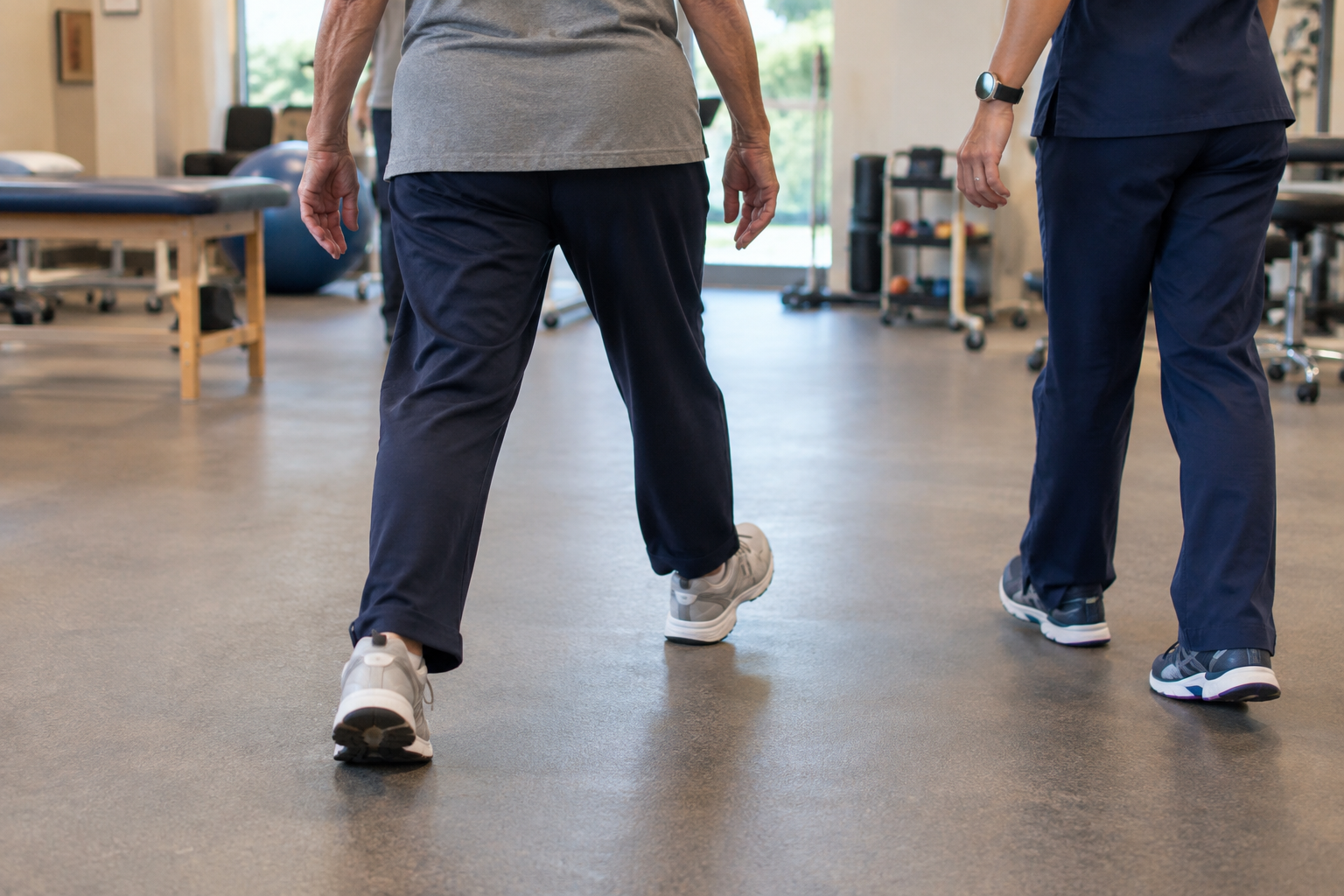
What Is a Wide-Based Gait?
A wide-based gait describes walking with the feet positioned farther apart than is typical. This creates a broader base of support and can help a person compensate for difficulty maintaining balance.
Someone with a wide gait may also:
- Sway from side to side
- Take short or irregular steps
- Have difficulty walking in a straight line
- Feel less stable when turning
- Walk more slowly or cautiously
- Have difficulty placing the feet consistently
Wide-based walking is particularly associated with
ataxic gait. In cerebellar ataxia, for example, increased step width can function as a compensatory strategy for impaired balance. However, a broad-based gait is not specific to cerebellar disease and can occur with sensory, vestibular and other gait disorders as well. The walking pattern therefore tells clinicians that something may be affecting stability, but it does not by itself identify the cause.
What Causes Wide-Based Walking?
There are several possible reasons someone may develop a wide-based gait.
Balance and coordination problems
Poor balance is one of the most intuitive reasons for increasing the distance between the feet. A wider base provides additional stability and may make the person feel less likely to lose balance. Coordination disorders can have a similar effect. Cerebellar disorders, for example, may interfere with the timing and coordination required for consistent steps.
Stroke and neurological conditions
Stroke, traumatic brain injury, multiple sclerosis and other neurological conditions can affect several components of walking simultaneously, including strength, sensation, coordination, balance and motor control. The resulting gait does not look the same in every patient. Some people may adopt a wider walking base as one component of a more complex gait abnormality.
Sensory impairment and peripheral neuropathy
Walking depends partly on proprioception, the body's ability to sense where its joints and limbs are positioned without constantly looking at them. When sensory information from the feet and legs is impaired, as can occur with peripheral neuropathy, a person may become less certain about foot placement and stability. Increasing the base of support can become a compensatory strategy.
Vestibular problems
The vestibular system contributes to balance and spatial orientation. Vestibular dysfunction can make walking feel unstable, particularly during head movements, turns or changes in direction.
Weakness and deconditioning
Not every wide gait originates from a primary neurological coordination disorder. Weakness in the legs or trunk, reduced endurance and physical deconditioning may also affect walking stability. Someone recovering after illness, surgery or a prolonged period of limited mobility may change the way they walk to feel more secure.
Fear of falling
Sometimes the walking pattern itself becomes protective. After a fall, near-fall or period of instability, a person may begin taking shorter, slower and wider steps. The wider base may provide confidence, even after some of the original physical limitation has improved.
Can Wide-Based Gait Be Improved?
In many cases, gait rehabilitation can improve aspects of walking, but the potential for improvement depends heavily on the underlying cause.
A person who developed wide-based walking after deconditioning, for example, presents a very different rehabilitation situation from someone with a progressive cerebellar disorder. This is why gait assessment is important.
A physical therapist or other qualified healthcare professional may evaluate factors such as:
- Step width and length
- Walking speed
- Balance during standing and walking
- Weight transfer between the legs
- Muscle strength
- Coordination
- Sensation and proprioception
- Turning ability
- Gait variability
- Fall history and confidence while walking
The objective is not simply to identify that the feet are too far apart. It is to determine
what is preventing the person from walking safely and efficiently with a more typical gait pattern.
How Is Wide-Based Gait Treated?
There is no single wide-based gait treatment because the walking pattern can have many causes. Rehabilitation is typically individualized according to the person's diagnosis, functional abilities and safety needs.
Gait training
Gait training allows the patient to practice the components of walking in a structured setting. Depending on the individual's impairment, therapy may work on step placement, gait symmetry, weight transfer, walking speed, turning and overall movement control. With improvement in the factors causing instability, some patients may gradually become less dependent on an excessively wide base of support.
Balance training
Balance exercises may progress from relatively stable positions toward increasingly challenging tasks. The goal is to improve control of the body's center of mass during standing and movement. Dynamic exercises may incorporate reaching, stepping, turning and changes in direction.
Strength training
Strength in the legs, hips and trunk contributes to walking stability. Rehabilitation may therefore include exercises targeting muscles required for standing, weight bearing, stepping and controlling the body during movement.
Coordination and foot-placement training
When motor control is affected, rehabilitation may include targeted stepping exercises, visual cues, floor markers or other strategies that encourage more accurate and consistent foot placement.
Repetitive walking practice
Walking is a complex motor task, and improving walking often requires practicing walking itself. Repetitive gait training gives patients opportunities to work on the timing and coordination of movement while gradually developing strength, endurance and confidence.
For some patients, however, the amount of walking practice they can complete may be limited by weakness, fatigue, instability or the amount of physical assistance they require.
Why "Just Put Your Feet Closer Together" Is Not the Solution
This is an important point for patients and caregivers. If someone walks with a wide base because they are unstable, the wider stance may be helping them stay upright. Simply asking them to narrow their steps removes part of that compensation without necessarily correcting the underlying problem.
The more appropriate question is: What is causing this person to need a wider base of support?
If poor balance, impaired weight transfer, weakness or reduced motor control is contributing to the gait pattern, rehabilitation can target those factors first. As walking control improves, changes in step width may follow when clinically appropriate.
Where Just Walk May Fit Into Gait Rehabilitation
For some people with wide-based gait, rehabilitation may involve substantial amounts of repetitive walking practice. This is where a gait rehabilitation device may become relevant.
Just Walk by Chaban Medical is a wearable neuromotor rehabilitation system designed for people with neurological and orthopedic impairments. The system uses a mechanical, magnet-driven design that provides resistance during movement and is intended to integrate into functional activities including walking.
Rather than treating wide-based gait as an isolated symptom, Just Walk can potentially be incorporated into a broader rehabilitation program addressing some of the functional problems associated with abnormal gait.
Depending on the patient's condition and rehabilitation plan, training may focus on areas such as:
- Repetitive walking practice
- Proprioceptive input
- Weight bearing and weight transfer
- Lower-limb and core muscle activation
- Coordination during functional movement
- Walking endurance
The system is described as providing continuous resistance and sensorimotor stimulation during movement, with adjustable resistance for functional activities such as walking, stair climbing, and lateral stepping.
What Makes Just Walk Different?
Many rehabilitation approaches separate strengthening exercises from walking practice. Just Walk is designed to apply mechanical resistance during functional movement itself, allowing muscle activation and neuromotor training to occur as the patient performs the task being rehabilitated.
The device weighs approximately four pounds and is designed to be wearable and portable. It provides four levels of adjustable resistance, allowing rehabilitation professionals to adapt its use according to the patient's abilities and rehabilitation goals.
This does not mean that Just Walk "corrects" wide-based gait. Instead, it may provide a tool for gait rehabilitation when a patient's treatment plan includes repeated functional walking practice and work on proprioception, strength or motor control.
Just Walk is available in the United States by prescription only.
Wide-Based Gait Should Be Evaluated Before Trying to Correct It
A wide-based gait can arise from very different conditions. Cerebellar dysfunction, sensory impairment, vestibular disorders, neurological injury, weakness and compensatory behavior can all produce superficially similar walking patterns. Clinical literature therefore emphasizes examining other gait characteristics and neurological findings rather than using step width alone to determine the cause.
If wide-based walking is new, worsening or associated with other neurological symptoms, medical evaluation is particularly important.
Once the cause and functional limitations are understood, rehabilitation can focus on what the individual actually needs: better balance, improved strength, more accurate foot placement, increased walking endurance, better coordination or a combination of these goals.
For patients who are appropriate candidates for repetitive gait training, Just Walk may provide another way to incorporate functional walking practice into a clinician-directed rehabilitation program.
To learn more about the system and its applications in walking rehabilitation,
visit the Just Walk rehabilitation device page
FAQ
?Is a wide-based gait always caused by ataxia
No. Cerebellar ataxia is strongly associated with a wide, unsteady gait, but wide-based walking can also occur with sensory impairment, vestibular problems, neurological conditions, weakness and cautious gait patterns.
?Should someone with a wide-based gait practice walking with their feet closer together
Not without appropriate assessment. The wide base may be compensating for impaired balance. Rehabilitation should address the factors causing instability rather than simply forcing a narrower step width.
?What exercises can help with wide-based walking
The appropriate exercises depend on the cause. A rehabilitation program may include balance exercises, strengthening, weight-shifting activities, coordination exercises, targeted foot-placement practice and repetitive gait training.
?Can a gait rehabilitation device help
It may be useful for appropriate patients as part of a broader rehabilitation program. The role of any device depends on the person's diagnosis, functional limitations, safety and rehabilitation goals.
Sources & References
- National Library of Medicine, StatPearls, Gait Disturbances. Clinical overview of gait abnormalities, including broad-based ataxic gait and their underlying causes.
- Evaluation of Cerebellar Ataxic Patients. Review describing clinical evaluation of ataxic gait, including wide-based walking as a compensatory response to imbalance.
- Neurophysiology of Cerebellar Ataxias and Gait Disorders. Review of gait characteristics and compensatory strategies associated with cerebellar disorders.
Important
This article is for informational purposes only and is not a substitute for professional medical advice; always consult your doctor or physical therapist before starting any exercise or using any device
Just Walk Official Distributor: +1-914-345-9300 Or +1-800-431-2830 👉 Become a Just Walk Distributor